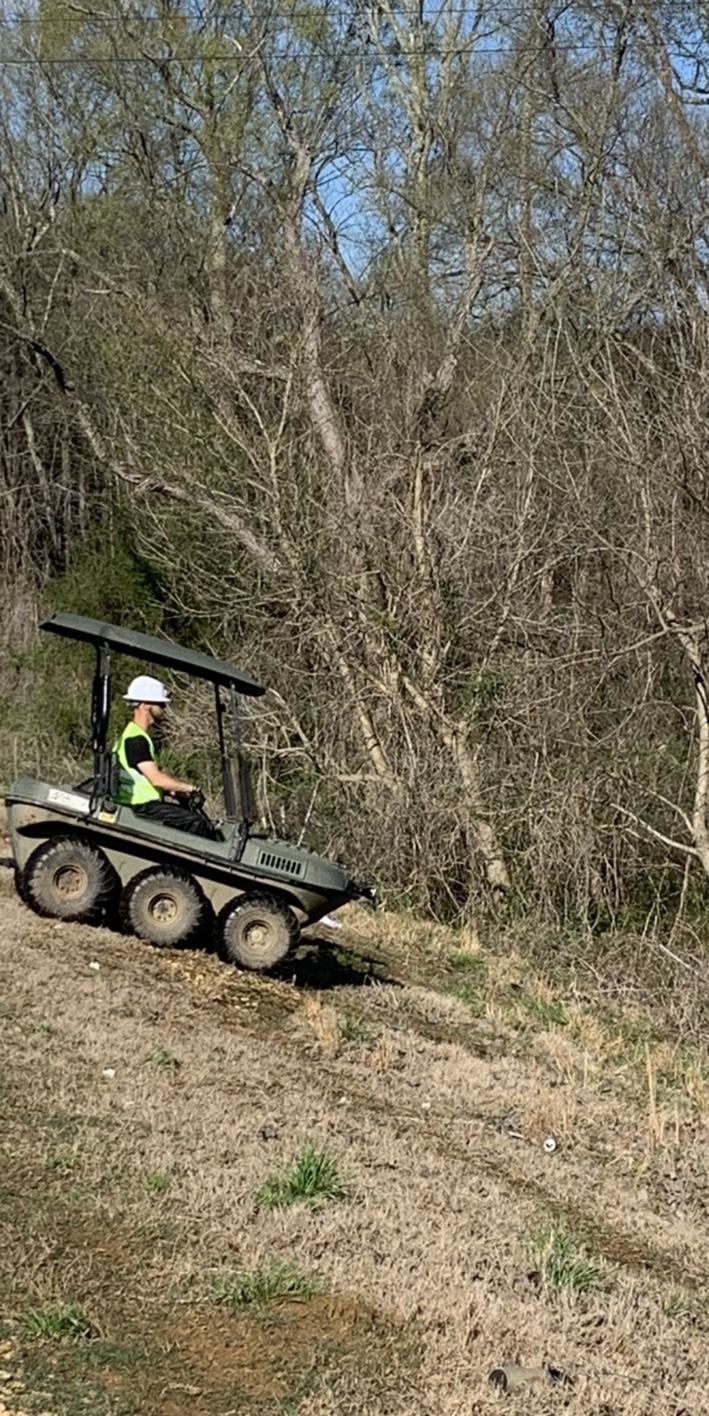
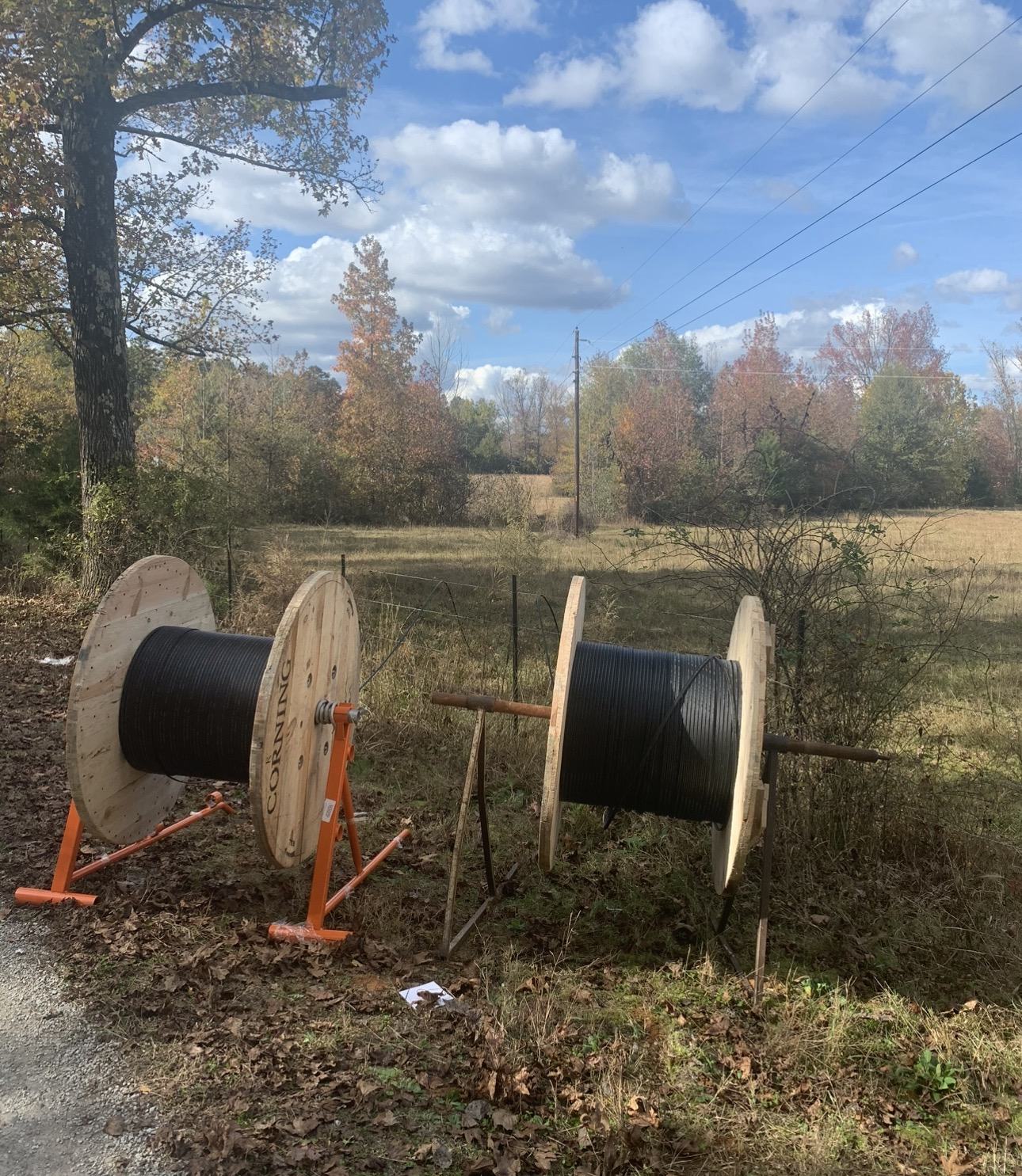
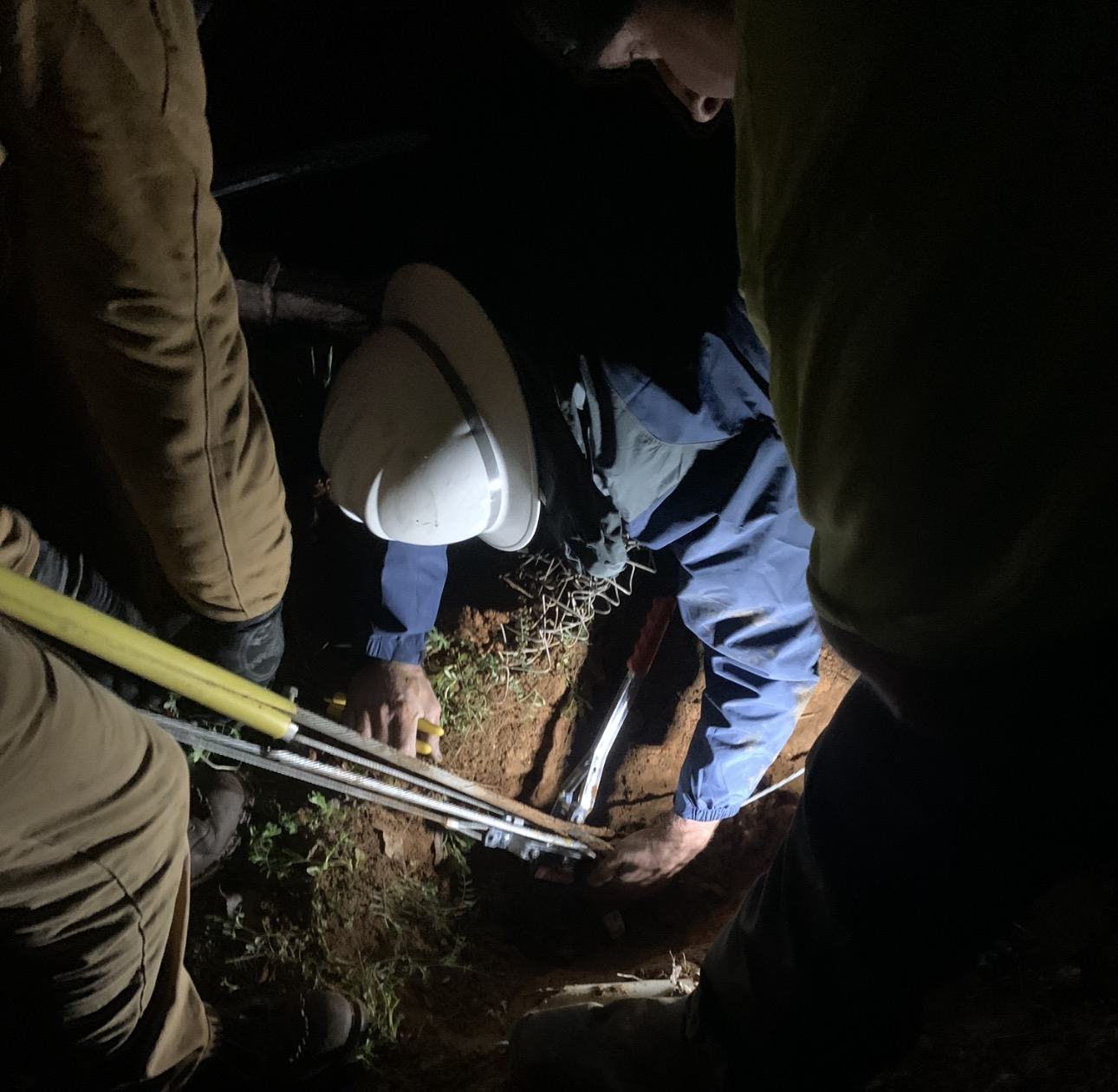
From the first foot of cable to the final test and turn-up, ClearSpan Infrastructure manages the full lifecycle of telecommunications infrastructure.
Aerial and underground drops, fiber splicing, home and commercial installs — ISP-grade precision on every run.
Comprehensive field engineering and data collection using industry-leading platforms — Katapult, IKE GPS, ArcGIS, Fulcrum, ESRI Field Maps, IQGEO, and O-CALC.
Enterprise-grade Cat5e/6/6A, fiber backbone, access points, switches, and routers for demanding environments.
Certified installation for Starlink, HughesNet, Viasat, Dish, and DirecTV — scaled for residential, commercial, and government.
Aerial mainline, HDD boring, fiber splicing, and full network test & turn-up at scale.
Rapid-mobilization teams for storm damage, disaster recovery, and time-sensitive infrastructure events.
Complex multi-phase deployments across retail, medical, hospitality, government, and utility sectors.
These are not service offerings. They are the operating standards we hold ourselves to on every job, every day — our ethical commitment to every client, every crew member, and every community we work in.
No job, deadline, or dollar amount is worth compromising the safety of our people or the public. Every crew member goes home the same way they arrived. This is non-negotiable.
Non-negotiable standardWe do it right the first time — not because someone is watching, but because our name is on the work. If something isn't right, we fix it before we leave. No shortcuts. No rework billed to the client.
First-time rightWe tell clients the truth — about timelines, about problems, about what's possible. We don't oversell, underdeliver, or cut corners in the dark. Our word is our contract.
Truth before comfortWe own our work — the wins and the mistakes. When something goes wrong, we step up, fix it, and learn from it. Our clients and crews deserve a leadership team that holds the standard, not one that deflects it.
We own the outcomeEvery interaction, every job site, every deliverable reflects who we are. We show up prepared, communicate clearly, and represent this trade with the seriousness it deserves. The bar is set by us — not the minimum.
The standard we set"These are the standards we hold ourselves to before a single tool comes out of the truck. They don't change based on job size, client type, or contract value."
— ClearSpan Infrastructure Leadership
Company OverviewClearSpan Infrastructure works across six primary industries — each with distinct compliance requirements, quality standards, and technical expectations. We've built the experience and credentials to meet them all.
Every ClearSpan Infrastructure project follows a defined process — built to keep clients informed, crews accountable, and quality consistent.
You reach out and we respond within one business day, scheduling a scoping call with the right person on our team.
We review your requirements and deliver a detailed proposal — scope, methodology, timeline, and pricing. No surprises.
Permits pulled, materials staged, crew assigned. Pre-task safety and quality briefing before any work begins.
Work executed to spec with ongoing quality inspections built into the process — not added at the end.
Final testing, OTDR traces, certification reports, and full closeout documentation. We don't leave until it's verified.
Every crew starts the day with a structured pre-task analysis — hazards identified, roles confirmed, equipment verified. No one picks up a tool until the brief is done.
QC isn't a final inspection — it's woven into the work. Supervisors verify standards at each stage. Problems are caught and corrected before they become rework.
Every project closes with full documentation — OTDR traces, splice logs, as-builts, test records, and photos. Delivered within 48 hours of completion. No loose ends.
ClearSpan Infrastructure is structured for demanding telecommunications work across outside plant, inside plant, field surveying, and emergency response. The value is not tied to a single marquee project. It is built around repeatable execution, disciplined field leadership, and closeout-ready deliverables.
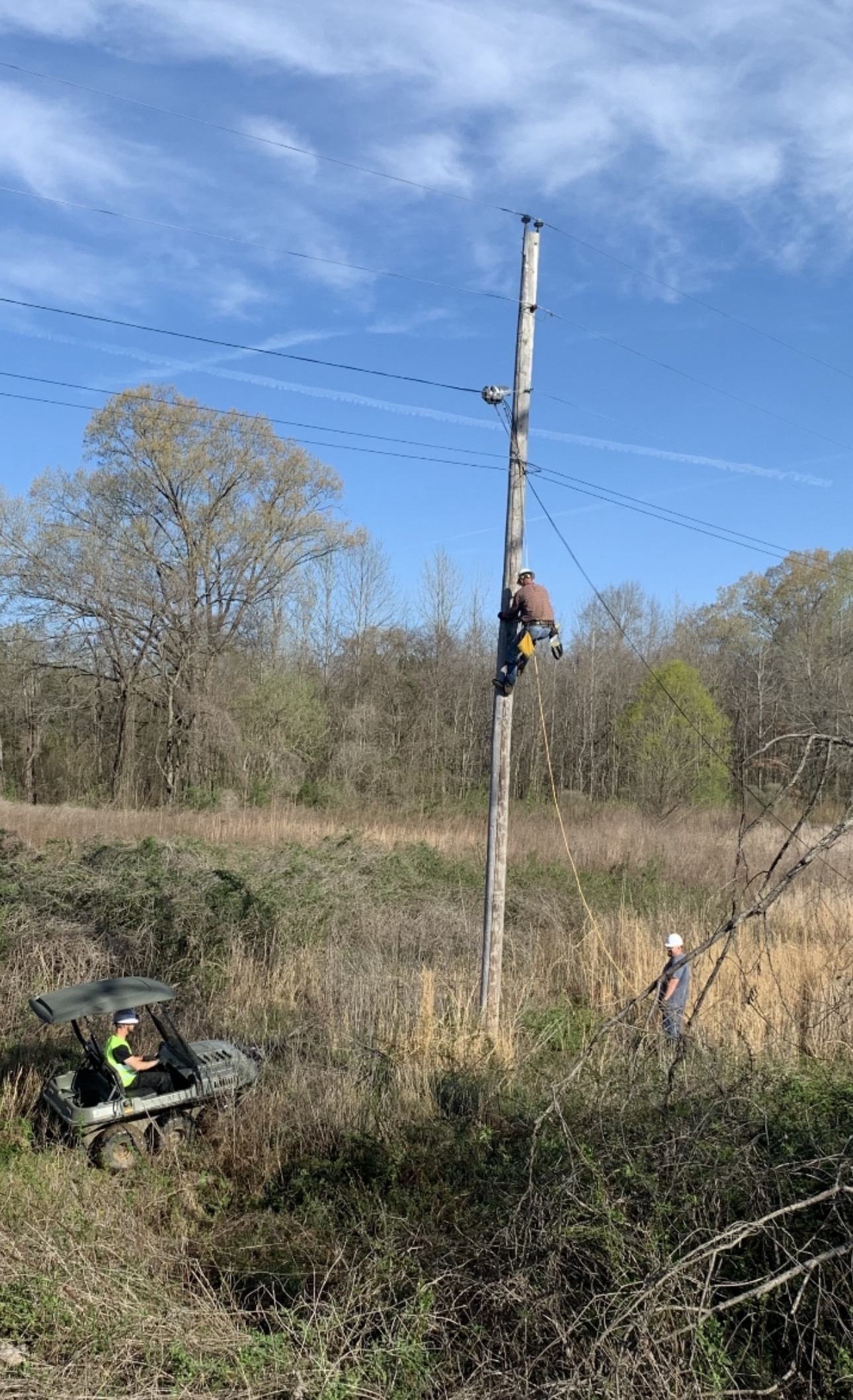
ClearSpan Infrastructure is built to understand scope quickly, mobilize with discipline, execute correctly, and communicate clearly from kickoff through closeout. That operating model matters just as much as the technical work itself.
Whether the assignment involves outside plant construction, structured cabling, field surveying, or urgent response support, the goal is the same: protect the customer's timeline, reduce surprises in the field, and deliver work that reflects well on everyone involved.
Aerial mainline, HDD boring support, fiber splicing, test and turn-up, and outside plant execution that requires coordination, production discipline, and clean documentation.
Pole survey collection, attachment inventories, route verification, and Katapult Pro driven field capture organized for design teams that do not want to spend weeks cleaning bad data.
Cat6 and fiber backbone work, MDF and IDF buildouts, access point drops, remediation, testing, labeling, and closeout deliverables built for occupied and schedule-sensitive environments.
Storm damage, outage recovery, time-sensitive cutovers, and urgent telecom support backed by organized intake, rapid scope alignment, and communication that keeps the customer informed while work moves.

Our leadership doesn't manage from the sidelines — they've built networks, spliced fiber, pulled cable, and climbed poles. That experience sets the standard our entire team is held to.
Our operating motto is a non-negotiable backed by inspection systems and accountability structures on every job.
Documented procedures, routine quality drills, and safety audits keep every team member operating at peak standard.
We actively invest in our technicians — all-hands training, certification programs, and ongoing development are core to our identity.
Our leadership has conducted work coast to coast, bringing national-scale experience to every project regardless of complexity.
"ClearSpan Infrastructure deployed crews on short notice after a major storm and had our aerial plant restored ahead of schedule. Their technicians were professional, worked clean, and documented everything."
"We brought ClearSpan Infrastructure in for a large-scale structured cabling project across our medical campus. Attention to detail was exceptional — every run tested, labeled, and documented to spec. Zero punch list items."
"ClearSpan supported our Katapult Pro field surveying work with the kind of consistency you want when pole data has to be clean the first time. The field capture was organized, communication stayed tight, and the deliverables were strong enough to move directly into design without constant cleanup or rework."
ClearSpan Infrastructure operates across five high-demand disciplines, bringing the same execution standard to every scope.
Aerial drops, underground drops, fiber splicing, home installs, commercial installs, and full test & turn-up.
View Service DetailField engineering and data collection using Katapult, IKE GPS, ArcGIS, Fulcrum, ESRI Field Maps, IQGEO, O-CALC, and related platforms.
View Service DetailCat5e/6/6A, fiber optic backbone, WAPs, routers, switches, and full MDF/IDF build-outs.
View Service DetailPlatform-certified installs for Starlink, HughesNet, Viasat, Dish, and DirecTV.
View Service DetailAerial mainline, HDD boring, trenching, fiber splicing, and complete network test & turn-up.
View Service Detail24/7 rapid-mobilization for storm damage, disaster recovery, and critical events nationwide.
View Emergency DivisionEnd-to-end FTTH execution for broadband operators, general contractors, utilities, and network owners — aerial and underground drops, precision fusion splicing, inside wiring, ONT activation, restoration support, and documentation-backed turn-up.
Our FTTH crews support both production-volume deployment programs and one-off problem sites. We work across aerial and underground environments, rural roads, subdivisions, MDUs, mixed-use properties, and commercial handoffs where field execution has to align with customer experience, client standards, and schedule pressure all at once.
ClearSpan focuses on disciplined execution at the field level: clean routing decisions, proper slack management, code-conscious penetrations, verified splicing, documented light levels, and client-ready turnover. In other words, the boring things that determine whether a build scales cleanly or turns into a punch-list circus.
Overhead fiber drop installation including strand attachment, ADSS support, pole-to-premise routing, weatherhead entry, drip loop control, and clearance-conscious placement.
Directional bore, trenching, conduit placement, handhole transitions, locate coordination, restoration follow-through, and route selection based on site conditions rather than guesswork.
Singlemode and multimode fusion splicing with splice tray management, enclosure organization, signal verification, and OTDR-backed acceptance support where required.
Complete home activation workflow including drop termination, ONT placement, power and battery considerations, router handoff, Wi-Fi positioning, and service verification.
Corridor routing, riser coordination, unit turn-up sequencing, IDF tie-ins, demarc organization, and clean work practices for occupied properties where access and appearance matter.
Business-class inside plant support for offices, retail, and mixed-use facilities including demarc extension, patch panel work, rack terminations, and managed handoff coordination.
Outage response, damaged drop replacement, failed splice remediation, hard cutovers, and time-sensitive restoration work to bring customers back online without dragging the issue across three vendors.
Optical power readings, test results, splice references, install notes, route photos, closeout details, and activation support packaged for client review and operational turnover.
Technicians who can move from drop work to splicing, premise activation, and client communication without the handoff failures that slow down service-order velocity.
Clear communication with residents, property managers, and business contacts. Clean penetrations, tidy work areas, and professional turnover instead of “job complete” with a mess left behind.
We do not treat documentation like an afterthought. Test results, install notes, and closeout support are part of the workstream, because unfinished turnover is just delayed failure with better branding.
From targeted market launches to overflow service-order support, we can align with broader construction, engineering, and activation teams to help networks move from passed homes to paying customers.
Ramp new service areas with drop installation, premise activation, and quality-focused customer turn-up support that protects first impressions in a new market.
Supplement overloaded internal teams during seasonal spikes, contractor gaps, missed SLAs, storm recovery, or fast-moving build phases that outpace available labor.
Take on difficult routes, repeat trouble calls, damaged drops, access-constrained properties, or sites where clean documentation and experienced field judgment matter more than raw volume.
Pole surveys, make-ready assessments, Katapult capture, and field intelligence that support faster and cleaner FTTH construction.
View Service →Aerial mainline, HDD boring, conduit placement, and backbone fiber work that feeds the drop and activation layer.
View Service →Commercial extensions, demarc work, MDF and IDF support, and internal distribution for mixed-use or business-class FTTH environments.
View Service →Precision field engineering, field inspections, address verification, and telecom data collection built for real network deployment. We support the survey layer behind FTTH builds, system expansions, greenfield routes, brownfield rebuilds, overlash planning, and related communications infrastructure work.
Accurate field data is the foundation of every successful telecom build. Permit applications, make-ready engineering, pole loading review, route selection, construction planning, and turnover documentation all depend on what the field team captures. We collect information in a way that supports the next decision instead of creating more cleanup for engineering, project management, or construction.
ClearSpan can support one-off site surveys, recurring field inspection programs, volume-based data collection, address validation, and pre-construction telecom fieldwork across active and planned networks. Whether the assignment is a greenfield expansion, a brownfield rebuild, an overlash evaluation, or a targeted FTTH push, our role is to return organized, actionable deliverables that move the program forward.
Aerial and underground utility mapping, pole attachment surveys, make-ready capture, and route intelligence using Katapult's field and engineering platforms.
Pole inventory and attachment surveys using IKE's field capture system to support pole loading, permit applications, and engineering review.
Geospatial data collection, mobile field capture, and client-ready map delivery using Esri tools that support telecom asset management and field workflows.
Configurable field collection for inspections, asset inventory, QA checklists, address verification, and custom telecom workflows where clean structured data matters.
Network inventory management and outside plant data capture using telecom-specific geospatial tools for plant records, updates, and validation.
Pole loading analysis and structural review support for make-ready engineering, attachment applications, and NESC-related evaluation workflows.
Pre-build, active-build, and post-build inspections covering field conditions, route feasibility, construction readiness, as-built checks, and telecom asset verification.
Serviceability checks, drop feasibility review, location validation, site access notes, and field observations that support market expansion and subscriber activation planning.
Pole and route surveys, address validation, serviceability review, and field collection that help broadband providers expand plant without feeding bad assumptions into engineering.
Early-stage field intelligence for entirely new telecom routes, site conditions, access constraints, attachment opportunities, and preliminary build planning.
Existing plant validation, asset record cleanup, field inspections, and on-the-ground verification where legacy records are incomplete, outdated, or unreliable.
Field review that supports overlash planning, attachment readiness, route confirmation, and identification of issues that could block efficient construction.
Inspection support for pre-construction readiness, active project verification, post-build closeout, and QA programs that require documented field conditions.
Site visits, address confirmation, serviceability notes, photo capture, and telecom-specific observations for expansions, upgrades, relocations, and new activations.
Telecom survey work only creates value if the output is usable. ClearSpan focuses on returning organized information that can be reviewed, handed off, and acted on without weeks of cleanup. Depending on the assignment, that can include structured attribute data, photos, route notes, field observations, address validation results, inspection findings, and platform-native records ready for engineering or operations review.
We can support recurring field programs, targeted market expansions, and one-time special projects where telecom teams need disciplined capture in the field instead of vague notes, fragmented photos, and inconsistent records.
Platform-native field records, GIS-ready data, inspection reports, photo documentation, route notes, address status, and issue flags.
Expansion planning, engineering handoff, permit support, make-ready review, turnover validation, and record cleanup.
Client workflow alignment, clear reporting expectations, disciplined field collection, and responsive communication from assignment through closeout.
Our survey outputs are structured for direct use in permit applications, pole loading software, engineering review, and construction planning — reducing back-and-forth and helping projects move with fewer avoidable stalls.
We work inside your existing platforms when possible. That keeps data aligned with the systems your engineering, operations, and construction teams already use instead of forcing extra translation work.
Our surveyors understand telecommunications infrastructure. They know what make-ready requires, what address validation affects, how field conditions change scope, and why clean survey capture directly influences downstream build quality.
Put the survey data to work. Aerial mainline, conduit placement, trenching, boring, and outside plant execution tied to the route intelligence built in the field.
View Service →From field validation and address readiness to drop construction and activation support, we can support the full sequence.
View Service →Inside plant assessments, site verification, and documentation support for enterprise, campus, commercial, and mixed-use telecom environments.
View Service →Inside-plant telecommunications infrastructure for the environments modern operations depend on. ClearSpan supports category cabling, fiber optic backbone, access points, media converters, POS connectivity, routers, switches, MDF / IDF build-outs, and related network infrastructure across healthcare, retail, hospitality, airports, industrial sites, campuses, oil and gas facilities, and multi-site enterprise programs.
The world runs on telecom infrastructure whether the site is a hospital, an airport, a restaurant, a warehouse, a hotel, a refinery, a school, or a retail chain with hundreds of locations. Structured cabling is the physical layer behind point-of-sale systems, wireless coverage, cameras, access control, phones, digital signage, back-office connectivity, and the network backbone that keeps the building operational.
ClearSpan is built to cast a wide net in structured cabling. We can support routine rollout work across repeatable locations just as effectively as we can support more demanding environments with live operations, strict standards, layered stakeholders, or difficult field conditions. From one facility to multi-state, multi-site programs, our teams are equipped to execute disciplined inside-plant telecom work with documentation, labeling, testing, and turnover that align with real client expectations.
Cat5e, Cat6, and Cat6A installations for data, VoIP, PoE, POS systems, wireless infrastructure, cameras, and connected building devices across commercial and industrial environments.
Singlemode and multimode fiber backbone, interconnects, risers, horizontal extensions, and backbone distribution between MDFs, IDFs, equipment rooms, and telecom spaces.
Professional access point cabling, mounting support coordination, patching, labeling, and PoE delivery for facilities that depend on reliable wireless coverage.
Connectivity support for registers, kiosks, routers, switches, media converters, back-office systems, and the telecom hardware that keeps business locations operating.
Rack installation, patch panels, cable management, grounding coordination, equipment-room organization, pathway discipline, and turnover-ready labeling.
Expansion work, remodel support, technology refreshes, relocation activity, retrofits, and cleanup of telecom spaces that have drifted out of standard.
Execution in occupied facilities where cleanliness, sequencing, access restrictions, customer flow, safety coordination, and communication all matter.
Structured turnover with port identification, organized labeling, test results when required, closeout notes, and deliverables that help the next team work faster.
Telecom cabling for clinics, hospitals, imaging areas, admin spaces, and support facilities where uptime, organization, and work discipline matter.
POS connectivity, access points, back-office wiring, store refresh support, and repeatable rollout work for chains that need consistent execution across many locations.
Inside-plant network extensions for terminals, ticketing areas, operational spaces, communications rooms, and the infrastructure layers that support passenger operations.
Cabling and fiber infrastructure for active industrial sites, yard offices, field operations, maintenance buildings, and facilities that need tough, organized telecom execution.
Guest-facing network infrastructure, room and back-of-house connectivity, event support spaces, and telecom work performed without disrupting the customer experience.
Office, campus, and agency deployments with controlled documentation, clean telecom room standards, and infrastructure built for long-term maintainability.
Some clients need a high-skill crew for a technically demanding facility. Others need a partner who can knock out site after site without letting quality drift. ClearSpan is positioned for both. Our technicians can handle complex environments with live operations, difficult access, layered technologies, and demanding closeout expectations, while also supporting standardized rollout programs where speed, consistency, and communication are what matter most.
That means we can support one urgent location, a regional refresh, or a multi-state multi-site task package where telecom infrastructure has to be deployed the same way across every address. We work to keep scope aligned, document what was installed, communicate clearly with client stakeholders, and hand the project back in a form that operations teams can actually use.
Category cabling, fiber backbone, WAP connectivity, telecom room organization, network hardware support, POS drops, and relocation / refresh work.
Site coordination, disciplined pathway work, clean labeling, organized turnover, and communication that supports project managers, IT teams, and facility owners.
Clients needing a telecom contractor who can execute across industries, travel across markets, and keep inside-plant quality consistent from site to site.
Bring fiber to the structure, then hand off the inside-plant layer to a team that can support risers, telecom rooms, and building-side connectivity.
View Service →Pre-construction fieldwork, site verification, address validation, and existing-condition capture that help cabling and facility projects start cleaner.
View Service →Support the outside-plant backbone and building entry work with a team that understands how inside and outside telecom scopes connect.
View Service →Primary, backup, temporary, and remote-site connectivity for environments where terrestrial service is unavailable, delayed, impractical, or simply not resilient enough. ClearSpan Infrastructure supports satellite deployments for commercial operations, hospitality, government and public-sector sites, construction programs, rural facilities, and multi-site tasking across demanding field conditions.
Satellite is no longer just a last-resort residential product. In the real world it fills several serious operational roles: primary connectivity for remote sites, continuity coverage when wired service is too slow to deploy, temporary service for active projects, and failover support where downtime carries real cost. The value is not just getting a dish online. The value is getting the right platform, mount, grounding method, cable path, network handoff, and documentation in place so the service actually works the way the client needs it to work.
ClearSpan approaches satellite like telecom infrastructure, not a gadget install. We can support rooftop, wall, pole, ballast, and ground-mount scenarios; coordinate indoor equipment placement and pathway routing; connect the service to routers, switches, access points, or hospitality distribution systems; and deliver turnover that gives the client a usable, supportable result. That applies whether the assignment is a single remote site, a hospitality refresh, a government field location, a construction trailer, or a multi-state rollout with repeatable standards.
Standard, Priority, and Flat High Performance installs for business, fleet, field, and fixed-site use cases including rooftop, wall, pole, and non-penetrating ballast configurations.
GEO satellite deployments for locations where coverage, service profile, or legacy operational requirements still point to HughesNet or Viasat as the right fit.
Dish and DirecTV support for hospitality, multi-tenant, and special-program environments where content distribution, property standards, and receiver organization matter.
Fast-turn satellite setups for construction trailers, project field offices, events, storm response, and other situations where connectivity has to be established before permanent circuits arrive.
Connectivity for rural offices, lodges, utility sites, clinics, schools, transport locations, and other facilities that sit outside practical fiber or cable build timelines.
Satellite as a primary service where no better terrestrial option exists, or as a backup path where business continuity, uptime, and resilience justify redundant connectivity.
Repeatable deployment standards, site-to-site consistency, documentation discipline, and coordination support for regional and multi-state tasking.
Site notes, photo capture, mount details, routing records, basic network handoff information, and closeout documentation that helps clients support the system after activation.
For sites that sit outside practical broadband build windows, satellite becomes the live operational circuit that keeps the location functioning.
When downtime is expensive, satellite can serve as a secondary path that protects operations during terrestrial outages or carrier delays.
Hospitality properties still rely on satellite for television distribution and, in some markets, internet service where terrestrial options are limited.
Construction, remediation, and field projects often need working connectivity long before permanent circuits, pathways, or carrier schedules catch up.
Satellite supports continuity, rural access, mobile operations, and field deployments where network availability has to be established quickly and predictably.
Even in wired enterprise programs, satellite often solves the odd sites, delayed sites, rural sites, and urgent sites that do not fit the standard carrier playbook.
Line-of-sight review, mount selection, cable path planning, equipment location, and power considerations before the install starts.
Stable mounting, clean penetrations where applicable, proper grounding practices, protected cable routing, and organized indoor equipment placement.
Activation, signal verification, router or LAN handoff coordination, and practical confirmation that the connection supports the intended use case.
Photos, install notes, mount and pathway details, and turnover records that keep support teams from guessing later.
Distribute satellite-delivered connectivity throughout the facility with disciplined inside-plant cabling, access point support, and telecom room organization.
View Service →Validate sites, capture field conditions, confirm feasibility, and collect the information that supports smoother deployment planning.
View Service →Rapid satellite deployment for outages, storm recovery, field command posts, and temporary operations when connectivity cannot wait.
View Service →ClearSpan Infrastructure supports outside plant construction with emphasis on aerial fiber optic construction, disciplined fiber splicing, and the field execution standards required to move backbone and access networks from design into reliable service.
Our OSP teams support the construction side of telecommunications with practical field knowledge, production discipline, and a strong bias toward clean execution. The work may be repetitive on paper, but in the field it rarely is. Pole lines vary. Make-ready conditions change. Access is inconsistent. Utility coordination can tighten schedules. Fiber counts, span lengths, attachment requirements, and restoration expectations all shift by market and owner. That is exactly why disciplined aerial crews matter.
ClearSpan Infrastructure is built to support fiber optic aerial construction and fiber splicing scopes for broadband expansion, feeder and distribution builds, overlash work, relocations, rebuilds, and other outside plant programs that need capable technicians in the field. We can support new network mileage, incremental expansion, brownfield upgrades, and time-sensitive restoration work with the same expectation: build it safely, build it cleanly, document it correctly, and leave the owner with something they can trust.
Strand placement, lashing support, cable attachment, hardware installation support, route progression, and day-to-day execution aligned with utility clearance requirements, client construction standards, and practical field conditions.
Outside plant splicing for feeder, distribution, and access networks with closure organization, label discipline, loss validation, and documentation that supports turn-up instead of slowing it down.
Support for existing plant environments where route congestion, legacy attachments, mixed hardware, and live-network sensitivity require careful sequencing rather than brute-force production habits.
Construction support for market expansion, rural broadband growth, damaged-route replacement, network modernization, and selective rebuild scopes where pace still has to coexist with quality.
OTDR traces, splice logs, route documentation, and turnover support that help owners, primes, and downstream activation teams understand what was built and how it performs.
Structured field support for programs that run across multiple states, multiple crews, or multiple site conditions without losing control of reporting, standards, or customer communication.
Aerial fiber construction is not just hanging cable and moving on. It requires field judgment, production control, and coordination with the broader telecom program around it. ClearSpan supports outside plant work where clients need crews that understand both the physical route and the operational consequences of bad construction, bad splicing, or sloppy turnover.
Support for new-build routes and fresh network mileage where pace matters, but acceptance quality, route consistency, and clean reporting matter just as much.
Work inside existing plant environments where legacy attachments, congestion, and live-network constraints force smarter execution and tighter control.
Additional cable placement on existing strand systems with careful attention to hardware condition, spacing, loading realities, and route-by-route variability.
Incremental buildouts, edge-market growth, and acceleration packages where operators need dependable field capacity without letting standards drift.
Route relocations, storm-damaged sections, and rebuild scopes where crews must restore service paths while protecting documentation quality and closeout readiness.
We can support primes, integrators, broadband operators, municipalities, utilities, and other telecom owners that need accountable field execution inside larger programs.
Splicing is where a lot of telecom construction quietly succeeds or fails. It is not enough to get light through the network. Closures have to be organized. Fiber routing has to make sense. Loss results have to be defendable. Records have to be usable by the next team. ClearSpan treats splicing as part of turnover quality, not a box to check at the end of construction.
We support splice-related work in programs where clients need clean field habits, consistent labeling, tested fibers, documented closure conditions, and turnover packages that reduce confusion during acceptance, activation, maintenance, and future expansion. That applies whether the scope is new feeder construction, distribution buildout, route restoration, or selective capacity growth.
Disciplined tray layout, fiber handling, labeling, and internal closure order that reduces rework and makes later access less painful for the owner.
OTDR and related optical testing support to confirm splice quality, identify abnormal events, and help document what the route is actually doing.
Usable splice documentation tied to route segments, closures, and fiber assignments so the project does not devolve into guesswork later.
Support for the handoff between construction, testing, and activation teams so the network can move toward service without unnecessary friction.
Route investigation, pole and asset data collection, and field verification that set up construction teams before crews ever mobilize.
View Service →Feeder and distribution construction often feeds directly into drop activity, subscriber turn-up, and network expansion work at scale.
View Service →When routes are damaged or timelines collapse, our emergency response posture supports urgent OSP repair, rebuild, and restoration scopes.
View Service →ClearSpan Infrastructure provides emergency telecommunications response for outage events, storm damage, facility failures, urgent cutovers, and other time-sensitive scopes that cannot wait for standard scheduling. Emergency deployment can be applied across every service line the company performs and is supported by expedited request timelines, compressed mobilization planning, and direct coordination with the customer team.
Response timelines depend on scope, access, customer approvals, weather, and material conditions, but ClearSpan Infrastructure is structured to move quickly when infrastructure is down or schedules compress unexpectedly. The bands below reflect the company’s standard emergency response posture.
ClearSpan Infrastructure targets 24-hour emergency mobilization throughout its primary response territory, covering Texas and Oklahoma, extending north through Illinois, Indiana, and Ohio, reaching east to North Carolina, and including Mississippi, Alabama, Louisiana, Arkansas, Tennessee, Georgia, South Carolina, and the broader Deep South states throughout that operating corridor.
For the balance of the Midwest and Northeast, ClearSpan Infrastructure targets 48-hour emergency response mobilization for qualifying events, allowing time for crew movement, customer coordination, access requirements, and material alignment.
For states west of the primary corridor, ClearSpan Infrastructure supports emergency and expedited scopes on a three-to-six day deployment timeline depending on travel, permitting, logistics, and the scale of the requested work.
Mobilization windows matter most when they are tied to the type of emergency, the expected field posture, and the operating conditions on site. The matrix below shows how ClearSpan Infrastructure frames emergency response timing by region and use case so customers can quickly understand what the deployment path is designed to support.
Aerial and underground repair scopes, storm restoration, line recovery support, splicing coordination, and time-compressed outside plant response work.
Urgent drop replacement, reconnection support, restoration installs, and field execution following plant repairs or service-impacting events.
Damage assessment, emergency walkouts, GIS-ready field capture, and fast verification work to help customers scope recovery and next steps.
Urgent closet rebuilds, cabling remediation, AP swaps, switch support, backbone repairs, and after-hours infrastructure restoration in occupied facilities.
Temporary and emergency connectivity installs for command posts, recovery operations, remote sites, and facilities that need communications restored quickly.
Emergency work moves faster when the activation path is clear. ClearSpan Infrastructure uses a defined response process that quickly classifies the event, aligns the field plan, and establishes the communication path before crews are dispatched. The goal is to shorten uncertainty at the front end so the customer gets a realistic response posture, not vague urgency language.
The event is reviewed for service impact, geography, urgency, access conditions, and the type of work required so the request enters the right response band immediately.
ClearSpan Infrastructure confirms the service line, site constraints, customer priorities, available information, and the likely field posture so execution does not begin with avoidable confusion.
Dispatch timing, travel band, field labor, tools, material needs, and staging assumptions are aligned against the response target and the realities of the site.
Once mobilized, the response path shifts to execution, customer communication, issue tracking, and field reporting so the emergency work stays controlled instead of chaotic.
The activation process is built to give the customer a clear next-step path quickly: what response band the event falls into, what information still needs to be confirmed, and what field posture ClearSpan Infrastructure is preparing to support.
Outside plant repair, aerial and underground recovery, and restoration work tied to outage or storm events.
View Service →Urgent backbone, closet, AP, and low-voltage remediation inside occupied buildings and critical facilities.
View Service →Temporary and backup connectivity deployment when terrestrial networks are disrupted or unavailable.
View Service →ClearSpan Infrastructure is a telecommunications contracting company led by an ownership team with more than 40 years of combined hands-on industry experience. That background includes work across some of the sector’s most demanding project environments, which has shaped the company’s operating approach: assess scope quickly, execute with precision, communicate with clarity, and deliver work that strengthens the customer’s outcome and reputation.
ClearSpan Infrastructure was not built from the outside looking in. Our ownership team came up through the work itself: fiber, cabling, installations, infrastructure support, field troubleshooting, documentation, customer-facing execution, and the day-to-day realities that separate dependable contractors from companies that simply show up with a logo and a truck.
That experience matters because sophisticated customers do not just need labor. They need partners who understand schedules, standards, site behavior, safety expectations, punch lists, documentation, escalation paths, and the cost of getting even simple details wrong. We built ClearSpan Infrastructure around that understanding.
Our team has supported projects where the margin for error was small, the visibility was high, and the expectations were non-negotiable. Those environments sharpened our judgment and reinforced a simple operating standard: do the right things consistently, stay accountable, and make life easier for the customer instead of harder.
Start Your ProjectWe understand what serious customers expect because we have worked inside serious project environments for years.
ClearSpan Infrastructure Company Overview
Many contractors compete on availability alone. We compete on judgment, discipline, communication, and execution quality. That is the difference between a temporary crew and a company customers can trust on meaningful scopes of work.
Each owner brings more than ten years of telecommunications experience, giving ClearSpan Infrastructure practical leadership instead of paper-only oversight.
We have worked in demanding environments where timelines, quality, and professionalism are closely scrutinized, and that sharpened how we execute.
We focus on the fundamentals that customers actually notice: showing up prepared, following the scope, keeping sites clean, and closing work correctly.
Good work is not complete until it is documented, communicated, and turned over in a way the customer can trust and use.
We communicate clearly, own problems early, and operate with the understanding that our customer's reputation is tied to our performance.
In an industry full of short-term operators, we differentiate through consistency, standards, and execution that reflects long-term thinking.
We work to understand the real requirement, the site conditions, and the operational constraints before work starts, reducing surprises and avoidable rework.
Our crews are expected to represent the customer well on site through clean work habits, strong communication, and disciplined adherence to task requirements.
We do not aim for temporary completion. We aim for installations and support work that remain dependable after turnover, inspection, and continued use.
Customers should not have to chase updates. We believe project communication should be direct, timely, and useful to the people managing the scope.
Labeling, test data, turnover information, and project records matter. We treat documentation as part of the deliverable, not an afterthought.
We understand that customers want contractors who can integrate into active environments, respect procedures, and help projects move forward without unnecessary friction.
ClearSpan Infrastructure exists to give customers a stronger field partner: one shaped by real telecom experience, sharpened by demanding project work, and committed to doing the simple things right every time.
Whether the assignment involves structured cabling, fiber infrastructure, site support, field deployment, or multi-location coordination, our objective is the same: execute professionally, reduce customer headaches, and deliver work that stands above the low-accountability competition that too often defines this industry.
ClearSpan Infrastructure operates from Mississippi with a practical response footprint that covers the Deep South, Texas, the Midwest, and the East Coast. The company has supported projects across the nation, with Texas through North Carolina representing its strongest operating band for planned deployments, fast mobilization, and repeat field support.
ClearSpan Infrastructure is strategically positioned for work throughout the southeastern United States while remaining capable of supporting broader project needs wherever the scope, timeline, and customer requirements justify deployment. The company is based in Mississippi, which supports efficient access into surrounding southern markets and strong reach into adjoining corridors that matter to enterprise, infrastructure, and multi-site programs.
In practical terms, the company's highest-efficiency response zone runs from Texas across the Gulf and Southeast and into North Carolina. That range aligns well with active construction markets, multi-state field programs, retail and hospitality deployment patterns, healthcare networks, utilities, and institutional clients that need dependable coverage without relying on fragmented local crews in every market.
Outside that core band, ClearSpan Infrastructure has experience supporting projects across the country. National work is approached with the same priorities that guide regional deployments: disciplined mobilization, clear communication, realistic scheduling, and field execution that protects the customer's timeline and reputation.
Texas to North Carolina is the company’s sweet-spot corridor for responsive execution, multi-state coordination, and repeat project support.
ClearSpan Infrastructure Coverage & Response
Based in Mississippi with efficient reach into surrounding southern markets.
Texas through North Carolina for regional deployment efficiency and response speed.
Deep South, Texas, Midwest, and East Coast project support.
Project experience across the country when customer scope requires wider mobilization.
The company is built to respond most efficiently across the Deep South and adjacent states where travel, logistics, and crew coordination can be handled with stronger speed and control.
ClearSpan Infrastructure is comfortable supporting multi-location projects that stretch across several states, especially when work must be standardized across different facilities or markets.
For remodels, cutovers, refreshes, and scheduled installations, response means more than speed. It means showing up prepared, aligned to the window, and ready to execute without unnecessary disruption.
When a customer needs broader coverage, the company can support national work through project-based mobilization and disciplined planning rather than overpromising fixed local presence everywhere.
Response is measured by how well work integrates into the real environment. ClearSpan Infrastructure is structured for active facilities, business-hour constraints, and controlled access conditions.
Coverage only matters if coordination holds up. The company prioritizes realistic commitments, clean updates, and field communication that helps customers manage scope confidently.
ClearSpan Infrastructure is especially well-positioned for customers who need a contractor that can cover a meaningful portion of the country without losing control of execution. That includes regional enterprise rollouts, healthcare networks, hospitality programs, retail refreshes, utility and infrastructure support, and project work routed through integrators or national service partners.
The company’s response philosophy is simple: maintain a strong operating core, mobilize intelligently, and support customers with a footprint that is honest, useful, and aligned with how real telecom work gets done.
ClearSpan Infrastructure approaches standards and compliance as execution disciplines, not checkbox language. Serious customers expect contractors who can work inside structured environments, follow site rules, align with technical frameworks, document correctly, and deliver turnover packages that support the people managing the project after the field work is complete.
ClearSpan Infrastructure is structured to work in environments where the standard is higher than simply finishing the task. That means understanding project requirements quickly, following installation expectations consistently, respecting site access and change controls, and delivering work in a way that is usable to the customer long after the crew demobilizes.
The company's leadership has worked inside demanding telecom, infrastructure, and multi-site deployment programs where documentation quality, communication discipline, and field professionalism directly affected project outcomes. That experience shaped an operating model centered on controlled execution rather than short-term completion.
For ClearSpan Infrastructure, standards and compliance do not only refer to safety rules or formal certifications. They also include labeling accuracy, turnover quality, escalation behavior, scope discipline, patching and closeout practices, and the ability to work cleanly inside active customer environments without creating avoidable friction.
Start Your ProjectReliable contractors do not just complete work. They leave behind documentation, communication, and turnover quality that project teams can actually trust.
ClearSpan Infrastructure Standards & Compliance
A field partner that understands technical expectations, site restrictions, documentation standards, and the difference between work that merely passes today and work that supports long-term operational confidence.
Projects are executed with attention to applicable customer specifications, structured cabling expectations, pathway requirements, and the practical details that keep installations clean and supportable.
Labeling, test results, change records, site notes, and turnover materials are treated as part of the deliverable rather than leftover admin work.
Work inside active environments requires respect for approved windows, escalation paths, outage sensitivities, and customer communication expectations.
Badging, escorted access, secured areas, operational spaces, and customer-facing professionalism are handled with the same seriousness as the technical scope itself.
Deliverables are organized to help the customer verify what was done, what changed, and what can be relied upon after turnover.
ClearSpan Infrastructure is built to outperform short-term operators through preparation, communication, and execution standards that reduce rework, noise, and avoidable callbacks.
Clear, usable labeling across closets, ports, panels, fiber paths, and field changes so the customer is not forced to rediscover the work later.
Where required by scope, test data and validation records are assembled in a way that supports acceptance, troubleshooting, and future reference.
Project records should reflect what actually happened in the field, including deviations, field conditions, and installed outcomes that matter after turnover.
Customers should be able to trace what was flagged, what was approved, what changed, and what decisions affected schedule or scope.
The goal is not simply to finish fast. The goal is to close cleanly, address outstanding items responsibly, and leave the scope in a supportable state.
Turnover should help the customer's IT, facilities, network, or operations teams take control of the environment without unnecessary confusion.
Standards and compliance are often where contractors quietly separate themselves from the market. The technical work may look similar on a quote sheet, but the experience for the customer is not similar when one contractor communicates clearly, documents properly, respects site controls, and turns over a scope cleanly.
ClearSpan Infrastructure is positioned to deliver that stronger experience because its leadership learned in environments where weak documentation, poor behavior, and inconsistent closeout were never acceptable. That operating discipline now shapes how the company serves enterprise, institutional, and infrastructure clients.
ClearSpan Infrastructure is building a disciplined contractor network for structured cabling, inside plant fiber, OSP support, satellite, surveying, and emergency-response telecom work. We are looking for crews and independent field professionals who can communicate clearly, protect quality, and step onto a project without needing constant hand-holding, which remains a surprisingly rare skill set.
This page is for independent technicians, subcontractor crews, small specialty companies, and field leads who already know what clean telecom execution looks like. We work best with people who show up prepared, understand scope boundaries, can document what they did, and do not turn every routine issue into a management emergency.
Strong applicants usually bring a mix of field credibility and operational readiness: reliable communication, realistic availability, job history that can be verified, and a working respect for customer property, site rules, timelines, and punch-list closure. If that describes you, we want the application to be easy and the review process to be worth your time.
Our contractor network supports multiple telecom scopes. Some opportunities are recurring. Others are project-based, market-specific, or driven by client needs and storm activity.
Cat5e, Cat6, Cat6A, fiber backbone, MDF and IDF work, APs, rack cleanup, labeling, testing, and closeout support for commercial environments.
Backbone extensions, terminations, splice support, testing, documentation, and restoration work in facilities where clean execution matters more than excuses.
Aerial and underground support scopes, conduit and fiber placement assistance, restoration coordination, and project-specific field execution where the fit is right.
Katapult, IKE GPS, ArcGIS, as-builts, field verification, data capture, photo documentation, and turnover support for planning and closeout phases.
Starlink and other remote-connectivity deployments for commercial, municipal, rural, and rapid-response environments when qualified coverage is needed.
Storm response, outage restoration, urgent replacement, after-hours deployment, and compressed-timeline work for partners who can mobilize without drama.
PPE, pre-task awareness, stop-work judgment, and site behavior that does not put people or client relationships at risk.
Installations that pass inspection, support the customer’s closeout process, and do not create expensive rework two days later.
Schedule transparency, milestone communication, issue escalation, and proof that your crew can operate like professionals instead of guessers.
Photos, counts, turnover notes, labeling, and usable field records that help the job move forward instead of stalling in admin purgatory.
Work within approved scope, flag changes early, and do not improvise commitments on the client’s dime because somebody felt creative.
Respectful site behavior, clean appearance, customer awareness, and a team attitude that protects long-term relationships.
Not every applicant will be asked for the same package. Requirements vary by client, scope, geography, and urgency. Still, the faster you can produce the basics, the easier it is to move from “interesting” to “ready.”
We review fit, geography, communication quality, and whether your experience matches live or expected work lanes.
Qualified applicants may be asked for documents, references, rates, tooling detail, or a short call to verify scope fit.
Once paperwork and readiness align, we keep you in the contractor pool for matching opportunities by market and scope.
When timing and scope match, we reach out for availability, client requirements, and deployment planning.
No. Approval depends on scope fit, compliance readiness, geography, current demand, and client requirements. We would love to pretend otherwise, but reality remains annoyingly attached to pipeline and timing.
Yes. We review independent technicians, small specialty teams, and larger subcontractor companies. The key issue is whether the applicant fits the scope and can operate professionally.
Not always. Some scopes require fully ready documentation before activation, while other conversations can start earlier. Be clear about your current status so nobody wastes time performing bureaucratic improv.
Yes. Local-only coverage is fine if the quality is strong and the geography lines up with client demand. Multi-state travel is helpful, but honesty is more helpful.
Send supporting documentation, references, or follow-up questions to contracting@clearspaninfrastructure.com.
Complete this form with accurate operational detail. Strong applications are specific, credible, and easy to verify. Supporting documents and follow-up questions can be sent to contracting@clearspaninfrastructure.com.
Your contractor application has been submitted. If your capabilities align with current or upcoming work, ClearSpan Infrastructure will contact you for next-step review and documentation. Supporting documents can also be sent to contracting@clearspaninfrastructure.com.
View Service LinesClearSpan Infrastructure treats safety as a field execution requirement, not a poster on the wall. Work is planned, hazards are addressed before tools come out, and issues are documented and corrected before production keeps moving.
Our expectation is simple: every project starts with a clear work plan, a real hazard discussion, and defined controls matched to the environment. That includes outside plant, structured cabling, restoration work, active commercial sites, occupied facilities, and fast-moving service environments where public exposure, schedule pressure, and changing conditions can introduce risk quickly.
Crews review scope, site conditions, hazards, controls, and required documentation before work begins, not halfway through the day when problems are already in motion.
Each job has defined responsibilities for supervision, spotting, traffic awareness, customer communication, and task ownership so no part of the work is left to assumption.
Required PPE, test gear, ladders, vehicles, and task-specific equipment are checked for job readiness before they are relied on in the field.
Any technician or supervisor can stop work when conditions change, controls fail, or something does not match the plan. Production does not outrank a legitimate safety concern.
Incidents, near-misses, damage events, and unsafe conditions are documented, reviewed, and followed by corrective action instead of being ignored because the day was busy.
Safety topics, site changes, and crew expectations are reinforced through onboarding, tailboards, and field communication that stays tied to the actual work being performed.
We do not treat safety as a generic checklist. Controls are matched to scope, location, customer environment, and the specific failure points most likely to create injury, service disruption, property damage, or rework.
We confirm where the work is happening, who is affected, what systems are live, where public exposure exists, and what access limitations or customer constraints could change how the task is executed.
Crews identify the actual risks tied to the task, including falls, traffic, energized environments, excavation exposure, overhead work, weather, confined access, customer operations, and material handling.
We establish the controls needed for the task, whether that means PPE, barricades, spotters, traffic setups, locates, permits, access restrictions, shutdown coordination, or a revised method of work.
Before work begins, the crew verifies documentation, gear, vehicle readiness, and communication paths so the job can move forward under control instead of improvisation.
For pole, ladder, lift, or elevated access work, we align fall protection expectations, equipment condition, work positioning, clearance awareness, and spotter responsibilities to the task and client requirements.
For trenching, boring, plowing, or hand-dig exposure, utility locate status, route verification, permit conditions, and excavation precautions are addressed before the first cut into the ground.
Where work happens near roads, retail access, tenants, or public pathways, crews use barriers, cones, work-zone discipline, and clear communication to protect both workers and the public.
In occupied buildings, active MDF and IDF rooms, or customer-critical environments, work is coordinated to reduce service disruption, protect adjacent systems, and maintain professional site control.
Storm response and field work can change fast. We expect reassessment when weather, access, visibility, or site conditions shift, especially on restoration and emergency work.
When outside crews are involved, we expect them to meet project-specific safety, documentation, insurance, and communication requirements instead of freelancing their own version of the work.
Depending on scope, this can include pre-task records, hazard notes, inspection logs, route changes, access documentation, closeout photos, turnover records, and issue escalation history.
If an unsafe condition, damage event, or quality issue is identified, the expectation is containment, communication, correction, and verification before the work is treated as complete.
Safety also shows up in how a crew operates: site control, housekeeping, customer communication, secure materials, orderly vehicles, and documented turnover that does not leave the client guessing.
Stop or secure the work area.
Notify the responsible supervisor or project lead.
Document the condition, event, or deviation.
Correct, revise, or escalate the work plan.
Resume only when the condition is under control.
Last updated: January 1, 2025. This policy describes how ClearSpan Infrastructure collects, uses, and protects information provided through this website.
This Privacy Policy applies to the ClearSpan Infrastructure website located at clearspaninfrastructure.com. By using this website you agree to the collection and use of information in accordance with this policy. If you have questions, contact us at info@clearspaninfrastructure.com.
We collect information you voluntarily provide when you submit a contact form, request a quote, submit an RFP, or apply as a subcontractor. This may include your name, company name, email address, phone number, project location, and project description.
We may also collect standard web analytics data through cookies or third-party analytics tools, including pages visited, time on site, browser type, and referring URL. This data is aggregated and does not identify individual users.
This website may use cookies — small text files stored on your device — to support basic site functionality and analytics. Essential cookies are required for the website to function properly. Analytics cookies are optional and are only set after you accept our cookie notice.
You can control cookie settings through your browser preferences. Disabling cookies may affect the functionality of certain features on this website.
We do not sell, rent, or trade your personal information to third parties. We may share your information with trusted service providers who assist in operating this website or conducting our business, subject to confidentiality obligations. These may include email delivery services, form processing providers (such as Formspree), and web analytics platforms.
We may disclose information if required by law, to protect our rights, or in connection with a merger, acquisition, or sale of company assets.
We implement reasonable technical and organizational measures to protect the information you provide through this website. However, no method of transmission over the internet is 100% secure, and we cannot guarantee absolute security. We encourage you to use caution when transmitting sensitive information online.
Depending on your location, you may have the right to request access to, correction of, or deletion of personal information we hold about you. To make such a request, contact us at info@clearspaninfrastructure.com.
If you have subscribed to our newsletter, you may unsubscribe at any time using the link in any newsletter email, or by contacting us directly.
This website is not directed at children under the age of 13 and we do not knowingly collect personal information from children. If you believe a child has provided us with personal information, please contact us and we will promptly delete it.
We may update this Privacy Policy from time to time. Changes will be posted on this page with an updated date. Continued use of this website following any changes constitutes acceptance of the updated policy.
If you have questions or concerns about this Privacy Policy or our data practices, contact us at:
Last updated: January 1, 2025. By accessing or using this website you agree to be bound by these terms. Please read them carefully.
These Terms of Use govern your access to and use of the ClearSpan Infrastructure website. If you do not agree to these terms, please do not use this website. These terms may be updated at any time and your continued use of the site constitutes acceptance of any changes.
This website is provided for informational purposes related to the services offered by ClearSpan Infrastructure. You may use this website for lawful purposes only. You agree not to use this site in any way that violates applicable laws or regulations, infringes on the rights of others, or interferes with the operation of this website.
Unauthorized use of this website, including attempting to gain unauthorized access to our systems, is strictly prohibited and may result in civil or criminal liability.
All content on this website — including text, graphics, logos, service descriptions, page layouts, and design elements — is the property of ClearSpan Infrastructure or its content suppliers and is protected by applicable intellectual property laws.
You may not reproduce, distribute, modify, create derivative works from, or commercially exploit any content from this website without the prior written consent of ClearSpan Infrastructure. Brief quotation for news reporting or commentary is permitted with attribution.
The content on this website is provided for general informational purposes only and does not constitute professional engineering, legal, regulatory, or technical advice. Do not rely solely on information from this website for decisions involving safety, code compliance, or professional practice. Always consult qualified professionals for project-specific guidance.
When you submit information through a form on this website — including contact forms, quote requests, RFP submissions, or subcontractor applications — you represent that the information you provide is accurate and that you have the authority to submit it.
Submission of a form does not constitute a binding contract or guarantee of service. All submitted information is handled in accordance with our Privacy Policy.
This website may contain links to external websites operated by third parties. These links are provided for convenience only. ClearSpan Infrastructure does not control, endorse, or accept responsibility for the content or practices of any third-party website. Access to linked websites is at your own risk.
This website is provided on an "as is" and "as available" basis without warranties of any kind, express or implied. ClearSpan Infrastructure does not warrant that the website will be uninterrupted, error-free, or free of viruses or other harmful components. We make no warranties regarding the accuracy, completeness, or timeliness of any content on this website.
To the fullest extent permitted by law, ClearSpan Infrastructure shall not be liable for any direct, indirect, incidental, consequential, or punitive damages arising from your use of or inability to use this website, even if advised of the possibility of such damages. Your sole remedy for dissatisfaction with this website is to stop using it.
These Terms of Use are governed by and construed in accordance with the laws of the State of Mississippi, without regard to its conflict of law provisions. Any disputes arising under these terms shall be subject to the exclusive jurisdiction of the courts located in Mississippi.
Questions about these Terms of Use may be directed to info@clearspaninfrastructure.com.
The page you're looking for doesn't exist or may have moved. Use the navigation above or the links below to find what you need.
ClearSpan Infrastructure delivers telecommunications field services across a broad range of industries and operating environments. From healthcare campuses and data centers to retail portfolios, utilities, transportation infrastructure, and managed service programs, our solutions are aligned to the technical scope and field realities of each sector.
Our work includes structured cabling, fiber optic infrastructure, field surveying, site verification, and multi-site project execution that supports efficient deployment and clean project turnover.
The industry pages explain where we fit. This section explains what we actually do once we are there. Whether the environment is a hospital, airport, factory, retail chain, campus, oil field, or broadband expansion zone, the underlying telecommunications work still has to be surveyed, built, installed, tested, documented, and handed over properly.
Category cabling, fiber backbone, MDF/IDF build-outs, rack and cabinet work, patching, pathway support, closet remediation, and the physical layer behind enterprise, retail, healthcare, industrial, and campus networks.
Field support for FTTH deployments, expansion programs, greenfield and brownfield activity, overlash environments, drop-related scopes, and the surrounding work packages that help broadband networks move from plan to service.
Aerial fiber optic construction, outside plant splicing, rebuild and restoration activity, route extensions, and turnover-ready support for feeder, distribution, and access networks.
Site surveys, route checks, field inspections, telecom asset verification, address validation, photo capture, notes, and other field data collection used to support estimating, design, construction, closeout, and quality control.
Repeatable execution for chains, campuses, branch networks, distributed facilities, and managed-service programs where consistency matters just as much as technical capability.
Cutover support, activation readiness, test results, redlines, turnover packages, field communication, and documentation that gives clients usable project closeout instead of avoidable confusion.
Satellite system support for remote operations, backup communications, temporary sites, difficult geography, and locations where traditional terrestrial connectivity is limited or slow to reach.
Access points, media converters, POS connectivity, routers, switches, cameras, access control pathways, and other connected infrastructure that rides on the telecom layer and still has to be installed cleanly.
These are not generic boilerplate industry blurbs. Each page is framed around the real work package, procurement path, internal decision makers, and standards context the sector typically operates under.
Full lifecycle broadband support for make-ready surveys, OSP construction, FTTH drops, BEAD documentation, network testing, and 24/7 emergency response.
Structured cabling, Wi-Fi refreshes, MDF/IDF builds, fiber backbone, and documentation-heavy multi-site office and campus programs.
Cross-connects, meet-me room work, fiber jumpers, labeling remediation, and portal-driven remote hands in 24×7 environments.
Hospitals, clinics, and medical campuses need nurse call pathways, clinical Wi-Fi, floor-to-floor and building-to-building fiber, and strict occupied-space coordination.
Guest Wi-Fi refreshes, AP swaps, POS cabling, camera and access control connectivity, and property-by-property renovation support.
Store network rollouts, POS and back-office wiring, AP installs, cutovers, and high-volume chain deployment support.
Branch refresh cabling, secure room connections, redundancy, segmented Wi-Fi, ATM/POS support, and vendor-risk-aware delivery.
Building telecom cabling, secure facility networks, public safety support infrastructure, surveillance, Wi-Fi, and documentation-heavy contracting.
Controlled-area cabling, secure lab connectivity, RF support infrastructure, and subcontract execution for defense primes and cleared facilities.
Substation and plant fiber, communications rooms, OT/SCADA physical layer work, pathway hardening, outage coordination, and documentation.
Passenger Wi-Fi, DAS support infrastructure, CCTV, access control, operations center wiring, and fiber backbone in terminals and stations.
Studio connectivity, redundancy, production-space fiber, closet modernization, and transmission-site support coordination.
High-density Wi-Fi, DAS support, POS networks, fiber backbone, security systems cabling, and off-season execution for event venues.
Connected intersections, street cabinet connectivity, municipal Wi-Fi, smart facility backbones, and public-sector documentation.
Terminal fiber, CCTV and access control pathways, yard and rail communications, operations center cabling, and badging-driven site access.
Converged low-voltage support for access control, cameras, intrusion, intercom, and the network backbone those systems ride on.
Telecom rough-in, pathways, rack rooms, backbone fiber, testing, and closeout packages inside schedule-driven new builds and renovations.
Plant fiber, hazardous-area support infrastructure, control room connectivity, and turnaround-driven communications and security work.
Warehouse Wi-Fi, forklift and IoT connectivity, production-line edge wiring, fiber backbone, and plant-floor structured cabling remediation.
Campus backbone, classroom and building cabling, Wi-Fi/AP installs, security infrastructure, and E-Rate-aware public procurement execution.
Standardized dispatch-ready installs, break/fix execution, POS and endpoint deployments, and multi-client field support programs.
From the make-ready survey that unlocks pole permits to the subscriber drop that activates service — ClearSpan Infrastructure covers every phase of the broadband build lifecycle. We understand ISP quality standards, volume production requirements, and the documentation every subgrantee and prime contractor needs to stay compliant.
Top-tier broadband contractors don't just pull cable — they manage the entire technical lifecycle. Here's the full scope of what ClearSpan Infrastructure brings to ISP and broadband programs.
Katapult Pro, IKE GPS, and O-CALC pole attachment surveys and loading analysis. We deliver permit-ready make-ready scopes your pole owners and engineers accept on first submission.
Aerial mainline lashing, HDD boring, open-cut trenching, conduit placement, and full splice-to-test turn-up. NESC-compliant construction with as-builts delivered at closeout.
High-volume aerial and underground drop programs at ISP-grade quality. Full ONT installation, inside wiring, CPE config, and address-level documentation on every completed drop.
ArcGIS, ESRI Field Maps, Fulcrum, and IQGEO-formatted field data collection and as-built creation. GIS-ready deliverables that integrate directly into your network management systems.
End-to-end optical loss testing, OTDR traces on every span and splice point, Fluke certification on copper, and carrier handoff documentation packages. Nothing turns up without test records.
Davis-Bacon certified payroll, prevailing wage compliance, BEAD subgrantee documentation, and weekly reporting formats accepted by state broadband offices and NTIA.
Rapid aerial and underground plant restoration after storms, accidents, and critical outages. FEMA PA documentation from mobilization day one. OTDR-verified on all emergency work.
Right-of-way permit preparation, utility notification coordination, municipal permit applications, and ongoing permit compliance monitoring throughout active construction programs.
BEAD programs and USDA ReConnect awards are driving the largest rural broadband construction cycle in history. Contractors who can handle the full lifecycle — survey through turn-up through documentation — are the ones getting repeat work from ISPs and winning spots on prime contractor teams.
Rural broadband builds expose every weakness in a contractor's documentation, compliance, and quality systems. Here are the four issues ISP operations teams deal with most — and how ClearSpan Infrastructure addresses them.
Many contractors complete the physical work but deliver closeout packages that fail ISP QC — missing OTDR traces, incomplete splice logs, no GPS coordinates, inconsistent address mapping. The ISP has to send someone back out.
Every ClearSpan Infrastructure closeout includes full OTDR documentation per span, GPS-tagged records, splice logs by closure, and address-level photos formatted to your QA template. We don't close a job until the package is complete.
Field surveys that skip O-CALC loading analysis or use the wrong Katapult workflow produce make-ready submissions that pole owners reject or send back for revision — adding weeks to permit timelines.
Our surveyors are trained on Katapult Pro and IKE GPS in the context of actual joint use permit processes. We know what pole owners require, and we format data to pass on first submission.
BEAD and ReConnect programs require Davis-Bacon compliance with certified weekly payroll, fringe benefit tracking, and proper worker classification. Contractors who aren't set up for this get disqualified or fined.
We maintain certified payroll capability, proper prevailing wage determination processes, and weekly reporting formats accepted by state broadband offices. Davis-Bacon compliance is built into our operations.
High-volume drop programs often degrade in quality as production pressure increases — crews cutting corners on inside wiring, skipping CPE verification, or leaving sites without subscriber sign-off.
Our QA process is tied to production, not separate from it. Supervisor field checks, standardized photo requirements, and daily production reporting maintain quality at volume without slowing the program.
ClearSpan Infrastructure maintains the documentation, registrations, and compliance posture that ISP vendor qualification processes require. SAM.gov registration, insurance certificates, and compliance documentation are available on request for procurement teams.
Get a response from our team within one business day.
Clinical environments require more than technical skill. They require teams who understand infection control procedures, occupied-building coordination, clinical network uptime requirements, and the documentation standards healthcare IT and facilities management expect at project closeout.
Modern healthcare facilities rely on dense, redundant, and highly documented network infrastructure. Here's the full scope of telecom work ClearSpan Infrastructure handles in medical environments.
ANSI/TIA-568 compliant Cat6A horizontal runs, fiber backbone between buildings and floors, MDF/IDF build-outs, and patch panel terminations. Fully Fluke-certified with complete documentation for healthcare IT teams.
WAP mounting, PoE drops, controller connectivity cabling, and antenna placement for clinical-grade 802.11ax wireless coverage. Dense deployment in patient rooms, corridors, nursing stations, and surgical suites.
Cabling infrastructure for nurse call systems, patient monitoring, intercom, and clinical communication platforms. Installed in occupied clinical environments with proper containment and infection control protocols.
High-density PoE+ infrastructure for medical device ecosystems — imaging equipment, bedside monitors, IV pumps, telemetry, and workstations on wheels. Every port Fluke-certified to Cat6A standards.
Primary and backup internet via Starlink Business, Viasat, and HughesNet for rural clinics, mobile medical units, and disaster response medical operations. Always-on connectivity for telemedicine applications.
Card access, CCTV, door contact, and physical security system cabling in healthcare environments. Installed with the safety protocols and documentation requirements that Joint Commission and HIPAA-adjacent physical security standards demand.
Clinical environments punish contractors who don't understand them. Infection control failures, disruption to active patient care, and incomplete documentation create real liability for facilities management teams.
Standard commercial contractors working in occupied hospitals frequently violate infection control requirements — missing containment, leaving debris in clinical corridors, or failing to seal work areas properly.
Our teams follow documented infection control procedures on every clinical site — containment setup, negative air pressure protocols where required, PPE compliance, and clean-as-you-go discipline. We coordinate all work with your infection control officer.
Poorly planned cabling work in occupied facilities can disrupt active network infrastructure, nurse call systems, or medical device connectivity — with direct patient care implications.
We work in phases coordinated with your IT and facilities management teams. Work affecting active infrastructure is scheduled outside clinical hours, and every phase has a defined rollback plan before work begins.
Healthcare IT departments require Cat6A certification with specific test parameters for PoE+ medical devices. Generic cabling contractors often test to wrong standards or deliver incomplete test reports.
Every port we install is Fluke-certified to the correct standard for its application — Cat6A for medical device environments, with complete test reports delivered in the format your IT team uses for warranty and maintenance records.
Contractors who show up without understanding OR schedules, patient census impacts, and departmental coordination requirements create friction with facilities management and administration.
We coordinate all work phasing with your facilities management team before mobilization. We understand that a hospital's scheduling constraints are non-negotiable, and we build our installation sequences around them — not the other way around.
Every healthcare project closes with full Fluke certification reports on every installed link, labeled as-built documentation formatted for your IT department, and a complete port schedule for ongoing maintenance use. Documentation is delivered within 48 hours of project completion.
Get a response from our team within one business day.
SAM.gov registered, Davis-Bacon compliant, and experienced across the full scope of government telecommunications work. ClearSpan Infrastructure brings the compliance posture, documentation discipline, and technical capability that federal and municipal contracts demand.
Government telecommunications contracts demand more than technical skill — they require compliance infrastructure, documentation discipline, and a team that understands how federal programs operate.
TIA-568 compliant structured cabling in federal buildings, courthouses, military installations, and municipal facilities. Security-conscious installation, Davis-Bacon payroll, and full as-built documentation for government records.
Starlink Business and Government tier installs, Viasat, and HughesNet for field offices, command posts, and continuity of operations facilities. Rapid deployment for emergency operations and FEMA-declared disaster response.
BEAD-compliant field data collection, existing network infrastructure inventories, and GIS-formatted assessments for state broadband offices, NTIA compliance, and municipal broadband planning.
ICS-aware teams with FEMA PA documentation capability from day one of mobilization. Aerial and underground infrastructure restoration on federally declared disasters, coordinated with utility and agency crews.
Aerial and underground fiber construction for government broadband initiatives, municipal networks, and public safety communications infrastructure. NESC-compliant, fully documented, Davis-Bacon certified.
Physical security system cabling for government facilities — card access, CCTV, perimeter detection, and intercom infrastructure. Installed with the procedural discipline and background-check capability government environments require.
Full Davis-Bacon Act compliance across all federally covered construction programs. Certified payroll preparation, fringe benefit tracking, weekly reporting, and wage determination verification for every covered classification.
Open to teaming arrangements with large primes pursuing IDIQ, MATOC, and task order contracts. Pre-qualified through several prime contractor vendor systems. CAGE code and UEI registered.
Government telecommunications contracts expose contractor compliance gaps quickly. Procurement officers and contracting officers have seen every flavor of non-compliance. Here's where most contractors fail — and how we're built differently.
Many contractors win government work without understanding prevailing wage requirements. Uncertified payroll, wrong worker classifications, and missing fringe benefit documentation create liability for the prime and the contracting agency.
Davis-Bacon compliance is built into our operations — not added as an afterthought. We maintain certified payroll systems, proper wage determination processes, and weekly reporting formatted for contracting officer review.
Contractors who haven't maintained active SAM.gov registration, a current CAGE code, and an active UEI can't receive direct federal awards or appear on most prime contractor preferred vendor lists.
ClearSpan Infrastructure is SAM.gov registered with an active UEI and CAGE code. We maintain our registration annually and can provide documentation immediately for vendor qualification processes.
Federal facilities, courthouses, and sensitive government environments require contractors whose personnel can pass background checks and work within access control protocols. Most small contractors can't demonstrate this capability.
We have documented procedures for working in secured facilities — personnel vetting, access coordination, secure area work protocols, and the procedural discipline government facility managers expect.
Contractors who mobilize for disaster response without structured time and material documentation lose reimbursement. FEMA PA requires specific record formats from day one — not reconstructed after the fact.
Our emergency crews use structured daily time logs, material tracking, and photographic documentation formatted to FEMA PA program requirements from first mobilization. We've supported clients through the PA reimbursement process.
Our one-page capability statement includes NAICS codes, core competencies, UEI and CAGE registration details, and full contact information formatted for federal and state procurement review.
Get a response from our team within one business day.
In hospitality, network quality is a guest experience issue before it's a technical one. ClearSpan Infrastructure installs and certifies the infrastructure that keeps guests connected, entertainment systems running, and operations online — with minimally invasive procedures that protect occupied properties and guest experience during construction.
From the guest room to the loading dock, ClearSpan Infrastructure handles the complete telecommunications and AV infrastructure that modern hospitality properties require.
High-density Cat6A WAP drops, ceiling access point installation, PoE distribution, and controller cabling for seamless guest Wi-Fi across all rooms, meeting spaces, pool decks, and common areas. Minimal disruption in occupied properties.
DirecTV and Dish MDU/MAS bulk billing configurations, rooftop antenna installation, coaxial signal distribution throughout multi-story properties, and in-room satellite TV for guest rooms and common areas.
HDMI, coaxial, and data infrastructure for in-room entertainment systems. Wiring for smart TV platforms, casting systems, and room control technology — installed with the attention to aesthetics that hospitality environments require.
Point-of-sale system cabling, kitchen display system infrastructure, management workstation drops, and back-of-house network for F&B operations, front desk systems, and property management connectivity.
Structured cabling for boardrooms, ballrooms, and conference centers — data and audio-visual drops, display connectivity, microphone and speaker infrastructure, and presentation technology cabling for event-grade venues.
Cabling and mounting infrastructure for lobby displays, way-finding signage, poolside entertainment screens, and brand display systems throughout the property — power, data, and conduit as needed.
Hospitality properties are unforgiving environments for contractors — occupied 365 days a year, guest experience is paramount, and network downtime is a front-desk problem. Most commercial contractors don't understand these constraints.
Contractors working in occupied hotels often create noise complaints, block corridors with equipment and materials, and create visible construction conditions that affect the guest experience during active stays.
We sequence room-by-room and floor-by-floor, coordinate with your operations team on blackout dates and high-occupancy periods, and maintain a jobsite standard that keeps guest-facing areas clear throughout the project.
Low-bid Wi-Fi infrastructure installs often under-deploy access points for the actual density of devices on a modern hotel network — guests with multiple devices, streaming TVs, and smart room controls overwhelm underpowered wireless systems.
We install for actual device density, not minimum coverage. Proper WAP placement, PoE infrastructure for current and next-generation access points, and cable routing that supports future upgrades without re-pulling.
Hotels operating on DirecTV or Dish bulk billing agreements have specific signal distribution and equipment requirements. Contractors unfamiliar with MDU/MAS configurations install systems that fail bulk billing audits.
We are platform-certified for DirecTV and Dish MDU configurations. We understand bulk billing agreement requirements and install systems that pass the platform's verification process on first submission.
Commercial contractors used to empty buildings don't understand the coordination complexity of working around housekeeping schedules, F&B service hours, check-in patterns, and event bookings.
Before any work begins, we map your operational calendar, coordinate daily access with your facilities and operations teams, and adjust work sequences in real time when occupancy or events require it.
We work with hotel management companies and ownership groups on multi-property programs — standardizing infrastructure across portfolios, managing rollout schedules, and delivering consistent documentation across every property. Single point of contact for the full program.
Get a response from our team within one business day.
Electric cooperatives and utilities are among the most active fiber builders in the country today — leveraging existing infrastructure for broadband, smart grid, and SCADA communications. ClearSpan Infrastructure brings the NESC-compliant field teams, utility-grade survey platforms, and emergency response capability that utility builds require.
Utility builds have unique requirements — NESC clearances, joint use agreements, operational coordination with energized electrical facilities, and documentation that integrates into utility asset management systems.
O-CALC structural loading analysis, Katapult and IKE GPS pole inventory and attachment surveys, joint use permit applications, and make-ready cost estimates formatted for utility tariff processes and NESC compliance.
NESC-compliant aerial fiber lashing on distribution poles, HDD crossings under roads and drainage, and direct-bury conduit in utility rights-of-way. Full documentation for utility GIS and asset management systems.
Communications cabling and structured network infrastructure for SCADA systems, automated meter infrastructure (AMI), substation communications, and smart grid endpoint connectivity in utility environments.
Fiber-to-the-premises deployments for electric co-ops entering the broadband business — from OSP mainline construction through subscriber drops and ONT installation for member broadband programs.
Rapid aerial and underground fiber plant restoration alongside power restoration crews. NESC-aware field teams, FEMA PA documentation, and surge capacity for multi-route simultaneous restoration after major storm events.
GPS-referenced as-built records formatted for utility GIS and network management systems. IQGEO-compatible network inventory, ArcGIS shapefile delivery, and field inspection programs using Fulcrum.
Utility builds have requirements that eliminate most telecom contractors before the first pole is touched — NESC clearances, joint use processes, operational coordination with energized facilities, and GIS-formatted documentation.
Contractors unfamiliar with utility work attach fiber to poles without verifying NESC clearance requirements, violating safety zones on energized electrical facilities. This creates liability and requires costly remediation.
Our crews understand NESC clearances for joint use attachments on distribution and transmission lines. We verify clearance compliance at every attachment point and document it in our as-built records. We coordinate with your operations team before working on any energized infrastructure.
Pole attachment surveys that don't include O-CALC loading analysis, proper foreign attachment inventory, or the attachment data in the pole owner's required format result in rejected joint use applications and weeks of delay.
Our field surveyors are trained on Katapult Pro and IKE GPS in the context of actual joint use applications. We run O-CALC loading analysis on poles requiring structural review and format attachment applications to the specific requirements of each pole owner.
Utility companies operate network management systems that require GIS-formatted as-built records. Contractors who deliver PDFs or non-spatial records force the utility to redigitize field data — adding cost and introducing error.
We deliver GPS-referenced as-built records formatted for ArcGIS, IQGEO, and standard shapefile import. Our field crews use ESRI Field Maps and Fulcrum for data collection in formats that integrate directly into utility GIS systems.
Telecom contractors who haven't worked in utility environments don't understand how to sequence fiber restoration alongside power restoration operations — which crews have priority, how to stay clear of energized equipment being restored.
Our emergency teams are experienced in working alongside utility power restoration crews. We understand how to coordinate fiber restoration sequencing with line crew operations, maintain safe distance from energized facilities being re-energized, and communicate through utility incident command structures.
ClearSpan Infrastructure maintains SAM.gov registration, Davis-Bacon compliance capability, and certified payroll infrastructure for utility co-ops participating in BEAD, USDA ReConnect, and other federally funded broadband programs. We are experienced working as a subcontractor to electric co-ops building broadband programs on their existing infrastructure.
Get a response from our team within one business day.
Schools and universities need reliable, high-performance network infrastructure for instruction, administration, research, and safety. ClearSpan Infrastructure delivers the structured cabling, wireless infrastructure, fiber backbone, and AV systems that educational institutions depend on — with E-Rate documentation capability and summer-schedule coordination that district IT teams require.
Modern educational campuses need more than a network connection in every classroom — they need a complete infrastructure strategy from the fiber backbone to the AV drop at the teacher's desk.
Cat6A classroom drops, teacher and student workstation ports, WAP ceiling drops, and MDF/IDF build-outs across K-12 and higher education campuses. E-Rate Category 2 eligible with complete USAC documentation.
High-density wireless access point deployment for 1:1 device programs, distance learning, and dense classroom environments. PoE infrastructure, controller cabling, and RF planning support for full campus wireless coverage.
Campus-wide fiber distribution between buildings — aerial or underground — serving as the backbone for data, voice, wireless, and security systems. Singlemode and multimode options with full OTDR verification.
E-Rate Category 1 eligible Starlink Education and GEO satellite installations for schools without adequate terrestrial broadband. USAC documentation, antenna installation, and indoor distribution cabling.
CCTV, card access, door contact, emergency communication, and visitor management system cabling for K-12 and university campuses. Installed during summer schedules to minimize academic year disruption.
Audio-visual cabling for interactive displays, projectors, video conferencing systems, and classroom presentation technology. Structured wiring for smartboards, document cameras, and instructional technology platforms.
School districts and universities have E-Rate compliance requirements, summer installation windows, and technology density demands that generic cabling contractors routinely underestimate.
Contractors who install E-Rate funded infrastructure without proper Category 2 documentation — equipment invoices, installation records, and service configuration documentation — put the school district's reimbursement at risk.
We maintain E-Rate documentation practices aligned with USAC Category 2 requirements. Installation records, equipment documentation, and Fluke certification reports are organized for BEAR and SPI reimbursement submissions from day one of the project.
Low-density WAP installations that may have worked for shared-device environments fail completely when a school moves to 1:1 student devices. Contractors who underdeploy access points create a problem the district pays twice to fix.
We install for actual device density — based on classroom population and device count, not minimum coverage area. Proper WAP placement, PoE infrastructure for current and next-generation access points, and cable routing that supports upgrade without re-pulling.
Contractors who underestimate school installation complexity or fail to coordinate with district facilities management often miss summer completion targets — pushing work into the academic year when access is restricted.
We build summer installation schedules with buffer for district-specific access constraints, asbestos abatement coordination, and building-by-building sequencing. We track daily progress against schedule and escalate early when sequencing needs to adjust.
Contractors who install cabling without coordinating with the district IT team on MDF/IDF layout, switch placement, and VLAN requirements create infrastructure the IT team can't manage long-term.
Before any work begins, we conduct a coordination meeting with district IT to confirm MDF/IDF layout, patch panel labeling conventions, port numbering schemes, and documentation format preferences. The closeout package is formatted to what your IT team actually uses.
ClearSpan Infrastructure maintains E-Rate documentation practices for both Category 1 (broadband connectivity) and Category 2 (internal connections) funded projects. We understand USAC documentation requirements and can coordinate with your E-Rate consultant on installation records and equipment documentation needed for BEAR and SPI reimbursement submissions.
Get a response from our team within one business day.
Corporate offices, headquarters, regional branches, and campus environments need more than generic low-voltage labor. They need teams who can build around active business operations, coordinate with both IT and facilities, and deliver MDF, IDF, Wi-Fi, backbone, and labeling packages that support long-term network administration instead of creating cleanup work for the internal team.
Enterprise work is usually a mix of IT-led standards and facilities-led construction realities. ClearSpan Infrastructure is positioned to support both sides of that equation.
Cat6A and fiber builds aligned to TIA-568 expectations, with pathway planning, labeling discipline, and closeout documentation that supports future MAC work and network operations.
Telecom rooms, ladder rack, sleeves, conduits, patching fields, grounding, and clean rack layouts built around office remodels, new fit-outs, and campus expansion projects.
AP cabling, mounting coordination, PoE-ready drops, and dense office deployment support for collaboration-heavy environments, conference zones, and high-occupancy floors.
Regional office standards, repeatable labeling, inventory control, and punch-list management for programs released by PO, phased remodel, or MSA work order.
Enterprise teams inherit closet chaos when installers treat labeling as an afterthought. We build labeling, patch schedules, and documentation into the core scope so internal IT is not forced to reverse-engineer the installation later.
When wall closures, ceiling work, or furniture moves get ahead of telecom rough-in, the result is rework and delay. We coordinate the telecom sequence with the facilities schedule so rack rooms, sleeves, AP drops, and final device locations stay aligned.
Corporate campuses often fail when AP support cabling is installed to a basic office standard instead of real-user density. We build for device-heavy floors, collaboration areas, conference rooms, and future hardware growth.
Branch and campus rollouts break down when every site is handled differently. We keep rack layout, labeling, closeout documents, and testing format consistent across every location.
ClearSpan Infrastructure fits enterprise work where the telecom package has to satisfy both the technical expectations of the network team and the sequencing realities of active office construction. That includes occupant-sensitive work, phased renovations, and repeatable multi-site rollout standards.
Get a response from our team within one business day.
Data center work punishes sloppy execution. The environment is change-controlled, documentation-heavy, and unforgiving of technicians who cannot work inside strict MOP and SOP frameworks. ClearSpan Infrastructure supports physical-layer work in colo, carrier hotel, and data center environments where timing, labeling, access control, and clean execution are non-negotiable.
These environments are procurement-heavy and operations-driven. Every move has to make sense to both the network team and the facility operations team protecting uptime.
Carrier cross-connects, fiber jumpers, port activation support, and meet-me room patching with strict labeling control and change-window discipline.
Cabinet-to-cabinet, cage-to-cage, and room-to-room fiber and copper work delivered with traceable labeling, neat routing, and closeout records operations teams can actually trust.
Hands-on execution for physical layer troubleshooting, recabling, patch moves, hardware support coordination, and emergency dispatch where on-site access is controlled through approved vendors.
Legacy cabling cleanup, rerouting, relabeling, and standards alignment for environments where unmanaged fiber sprawl is creating risk during MAC activity.
Data center operators cannot tolerate crews who show up underprepared. We pre-stage scope, review the run plan, and execute inside the maintenance window with clean handoff notes.
The fastest way to create operational risk is to leave jumpers or ports ambiguously labeled. We keep naming, destination documentation, and physical routing tight enough for future MAC work.
Facilities need technicians who can adapt inside the physical layer, not just stand next to a rack. ClearSpan Infrastructure can support structured tasks, remediation, tracing, and physical troubleshooting support.
Many facilities are carrying years of unmanaged jumpers and ad hoc patching. We can remediate the environment so future work is faster and less risky.
ClearSpan Infrastructure fits where operators need a field partner that can work cleanly inside live facilities, follow site access and change procedures, and deliver physical-layer work without creating a second documentation problem for the operations team.
Get a response from our team within one business day.
Retail work lives on deadlines, repeatability, and minimal disruption to stores that still need to keep taking money. ClearSpan Infrastructure supports chain-wide deployment programs where POS, Wi-Fi, back-office, and device cutovers have to happen fast, clean, and consistently across dozens or hundreds of locations.
The work is usually driven by national programs, integrators, facilities vendors, or managed service providers. The expectation is not just technical execution. It is repeatable field logistics.
Structured cabling for registers, service counters, pharmacies, back-office devices, and network equipment in active store environments.
AP swaps, new drop placement, PoE support, and store-floor wireless upgrades for inventory, handhelds, guest access, and device density improvements.
Time-boxed site activity tied to new POS systems, store openings, remodels, pharmacy tech updates, or chain-wide hardware refresh programs.
Legacy remediation, rack cleanup, and documentation alignment where prior vendors left each store in a different physical condition.
Retail chains lose money when every site gets handled differently. We work to standardized scope, labeling, reporting, and exception handling so program managers are not buried in cleanup.
Retail sites are not empty shells. We schedule around customer traffic, stocking cycles, pharmacy operations, and overnight or early-morning execution windows when required.
Payment lanes and back-office cutovers need clean coordination. We sequence cabling and physical swaps to reduce the risk of cashier downtime and post-cutover confusion.
Retail programs fall apart when location-level records are inconsistent. We keep site notes, labels, and completion reporting standardized across the fleet.
ClearSpan Infrastructure fits retail programs that need disciplined field execution across distributed locations, not one-off heroics. The goal is consistent store outcomes, clean reporting, and low drama during chain-wide deployment waves.
Get a response from our team within one business day.
Banks, financial branches, and trading or operations facilities care about risk before they care about marketing language. ClearSpan Infrastructure supports the physical layer in environments where secure rooms, vendor onboarding, segmented connectivity, and tightly governed third-party access are normal operating conditions.
Financial institutions often route field work through national facility providers, approved vendors, or procurement platforms with stronger controls than a normal commercial office project.
Structured cabling, equipment-room support, teller and office area drops, and network refresh work tied to branch remodels, relocations, or hardware updates.
Physical infrastructure for secure rooms, diverse pathway planning, segmented Wi-Fi support, and resilience-minded backbone or edge connectivity work.
Field support infrastructure for ATM areas, branch device refreshes, POS-adjacent cabling, and low-voltage coordination where payment systems are part of the environment.
CCTV, card access, intercom, and security backbone support coordinated with branch operations and corporate security requirements.
Financial locations carry security, customer-service, and access expectations that make branch work different from commercial office work. We plan around that reality.
Some contractors fail before mobilization because their documentation is weak. We understand why institutions want COIs, onboarding packets, and access discipline before work starts.
Branch projects often need network and security coordination together. We can support the physical layer for both instead of forcing the client to manage needless vendor friction.
Resilience is not just a network diagram. If diverse paths or protected areas are not respected physically, the design loses value. We execute with the physical layer in mind.
ClearSpan Infrastructure is a fit where financial institutions need a telecom and low-voltage field partner that respects operational controls, branch realities, and the documentation burden that comes with regulated business environments.
Get a response from our team within one business day.
Defense and national-security work is rarely won through generic outreach. It is usually executed under primes, inside controlled sites, with more documentation and access discipline than a standard commercial job. ClearSpan Infrastructure supports the physical layer for defense-adjacent programs where secure facility work, controlled areas, and long-cycle subcontracting are part of the operating model.
The value here is disciplined field execution under prime-driven programs, not pretending every contractor is the prime on a secure federal scope.
Structured cabling, closet support, and backbone work inside facilities with controlled access, escort requirements, and tightly managed work areas.
Physical-layer support for labs, restricted operational spaces, and network infrastructure serving mission-support areas.
Support infrastructure for in-building communications systems, pathway work, and low-voltage coordination in technical environments.
Field execution that plugs into prime-led documentation, scheduling, onboarding, and quality-control structures instead of fighting them.
Cleared or sensitive sites need crews who can handle site rules, restricted areas, and procedural discipline without creating operational noise. We approach the work with that mindset.
Prime-led defense work depends on documentation, onboarding, and scope control. We are prepared to work inside that structure rather than trying to force our own chaos into it.
Badging, escorts, tool rules, and schedule windows can derail site work if not handled upfront. We treat access as part of execution, not a side issue.
Controlled environments need physical infrastructure that respects the difference between ordinary office space and restricted mission-support areas.
ClearSpan Infrastructure is best positioned for defense-adjacent subcontracting and secure-facility field work where a prime needs a physical-layer partner that can execute cleanly, document properly, and respect the operating culture of controlled environments.
Get a response from our team within one business day.
Airports, transit systems, rail environments, and transportation hubs combine public access, security controls, and operational uptime in ways ordinary commercial work does not. ClearSpan Infrastructure supports physical-layer telecom infrastructure for transportation environments where terminals, stations, operations centers, and venue-like public spaces all intersect.
This work is commonly procurement-driven, integrator-led, and deeply documented. The right field partner has to survive the site access process before the first cable is even pulled.
Structured cabling, AP support, and public-space wireless infrastructure for terminals, concourses, stations, and other high-density transit areas.
Cabling pathways and support infrastructure for cameras, access control, intercom, and restricted-area security systems.
Telecom rooms, operations center support, staff-area cabling, and facility backbone work that keeps transportation operations connected behind the scenes.
Pathways, backbone, mounting coordination, and low-voltage support around in-building public-safety or carrier wireless enhancement projects.
Passenger circulation, secure areas, operations sensitivity, and public visibility change the execution model completely. We plan around that reality.
Badging, escorts, and restricted-area access can destroy schedules when ignored. We treat access coordination as part of the project baseline.
Passenger hubs need infrastructure that accounts for density, aesthetics, operations, and constant public use. We do not approach them like back-of-house utility rooms.
Transportation clients need clean distinction between passenger-facing work and operations-critical environments. We sequence and document accordingly.
ClearSpan Infrastructure is a fit where transportation owners or their primes need a field team that can execute around public operations, secure zones, and documentation-heavy infrastructure programs without acting surprised by the complexity of the environment.
Get a response from our team within one business day.
Studios and media facilities do not tolerate messy physical infrastructure. Broadcast environments need clean routing, redundancy, tightly managed change windows, and coordination with production schedules that do not care about a contractor’s excuses. ClearSpan Infrastructure supports the physical network layer in broadcast and media spaces where uptime and sequencing matter.
Broadcast work is a blend of enterprise IT discipline and production-environment timing. The right contractor has to respect both.
Fiber and copper connectivity between control rooms, studios, editing areas, production support rooms, and related technical spaces.
Closet modernization, backbone routing, and physical-layer support designed around uptime and production continuity.
Structured cabling and low-voltage work sequenced around live production schedules, off-air windows, and critical event timing.
Legacy cable cleanup, relabeling, rerouting, and documentation alignment in facilities where years of ad hoc growth have made future change risky.
Broadcast projects break down when contractors treat a studio like a generic office. We schedule around production risk, not against it.
Media facilities often accumulate years of unmanaged physical growth. We can remediate without making the next change even riskier.
If physical routing, labeling, and separation are sloppy, the resilience claim is fiction. We execute with the physical layer in mind.
Engineering teams need traceable documentation after the work is done, not just a verbal assurance that everything is probably fine.
ClearSpan Infrastructure is a fit where broadcast and media clients need a telecom field partner that can work cleanly around technical operations, production timing, and physical-layer redundancy expectations.
Get a response from our team within one business day.
Venue environments are brutal on weak planning. They combine off-season construction windows, event-driven deadlines, public safety expectations, high-density wireless demand, and multiple owner or operator stakeholders. ClearSpan Infrastructure supports the physical telecom layer for venues that need clean execution when the building is empty and reliable infrastructure when it is not.
Venues care about fan experience, back-of-house operations, payment systems, and security all at once. The physical layer has to support all of it without turning the next event into a troubleshooting exercise.
AP support cabling, backbone coordination, pathway planning, and equipment-room work for concourses, bowl areas, suites, and high-traffic public spaces.
Physical infrastructure for concession, ticketing, vendor, and event operations systems where throughput and uptime matter during crowded events.
Backbone and support infrastructure around in-building wireless enhancement and public-safety communications systems.
CCTV, access control, restricted-area support, and event-facility security backbone work coordinated with venue operations.
Venue schedules punish unrealistic planning. We align scope to blackout windows, off-season timing, and back-of-house access constraints instead of pretending there is unlimited downtime.
A venue is not an office with bigger ceilings. We approach AP support and backbone planning with crowd density and operational pressure in mind.
Venue projects often involve ownership, operators, facilities, security, and event technology. We keep scope and field reporting structured so the site is not mediating basic contractor confusion.
In practice, the physical layer for POS, access control, and surveillance often intersects. We can support the converged environment rather than forcing fragmented execution.
Venues need more than a cabling crew. They need a field partner that can plan around event calendars, high-density public spaces, and the overlapping technical systems that keep live facilities functional on show day.
Get a response from our team within one business day.
Municipal technology work usually sits between public works, IT, procurement, and whatever agency actually owns the cabinet, facility, or right-of-way. ClearSpan Infrastructure supports non-FTTH municipal connectivity programs where city infrastructure needs practical field execution and public-sector documentation discipline.
This sector is usually less about one glamorous project and more about many small, operationally meaningful scopes spread across real city assets.
Physical connectivity for cabinets, traffic or municipal field infrastructure, and related communications support work in public rights-of-way or city-managed assets.
Wi-Fi support infrastructure and building backbone work for public buildings, community spaces, and civic facilities.
Structured cabling, security connectivity, and communications support for municipal buildings and operational facilities.
Field execution supported by submittals, scope documentation, and public-procurement discipline rather than handshake chaos.
Municipal scopes often touch IT, public works, transportation, and facilities at the same time. We understand the need for structured communication instead of assuming one department controls everything.
Street and cabinet work is not just a cable problem. We plan around the public-infrastructure context, not in denial of it.
Cities need records, submittals, and clean scope traceability. We approach the work with that administrative discipline in mind.
Smart-city ambitions fail when installers ignore cabinet realities, pathway constraints, and on-site access conditions. We execute around what is physically true, not what looked neat in a slide deck.
ClearSpan Infrastructure adds value when municipal technology scopes need a field contractor that can operate in the overlap between public works, civic IT, and practical infrastructure execution without making the city referee the basics.
Get a response from our team within one business day.
Port and maritime environments combine industrial operations, restricted access, rail or yard interfaces, security controls, and procurement structures that look more like public infrastructure than ordinary commercial real estate. ClearSpan Infrastructure supports the physical telecom layer in terminal and port environments where operations, security, and logistics all matter at once.
This is the kind of work where access control, vendor registration, and site badging are part of execution, not paperwork somebody deals with later.
Fiber and structured cabling support across port terminals, administrative facilities, operations areas, and related communications spaces.
Support infrastructure for surveillance, restricted-area controls, gate systems, and operational security environments.
Physical-layer support for communications tied to yard activity, operational facilities, and intermodal or logistics workflows.
Closet support, patching, backbone, and documentation for the technical spaces behind port and terminal operations.
Port work can be delayed before it starts if access requirements are ignored. We treat badging and site authorization like part of the execution plan.
Ports need the physical layer to support both. We can work across operations centers, admin areas, yards, and security systems without artificial separation.
Maritime facilities are operational environments with logistics pressure, restricted zones, and industrial pace. We plan accordingly.
Vendor registration, documentation, and portal readiness matter in this sector. We understand that upfront burden.
ClearSpan Infrastructure is a fit for port and terminal work where the client needs a telecom field partner that can navigate access restrictions, support converged operations and security infrastructure, and behave like a contractor who understands industrial facility reality.
Get a response from our team within one business day.
Security integrators need field partners who understand that cameras, access control, intrusion, intercom, and the backbone supporting them are not separate universes. ClearSpan Infrastructure supports converged low-voltage work where the physical security system depends on disciplined cabling, closets, pathways, power coordination, and network-aware execution.
This is often prime-integrator work. The right subcontractor fits the integrator’s workflow, protects the schedule, and leaves the system vendor with a clean infrastructure base.
Door controllers, readers, electrified hardware support, pathway coordination, and cable routing for secure openings and controlled spaces.
Camera support cabling, uplink pathways, IDF support, and equipment-room coordination for enterprise surveillance deployments.
Low-voltage cabling and support infrastructure for intrusion devices, intercom, emergency communication, and related systems.
The security system is only as good as the underlying structured cabling and closet environment. We support both sides of the install.
Systems get blamed for problems created by sloppy pathways, labeling, or closet work. We protect the physical layer so the integrator is not inheriting preventable headaches.
Access control and surveillance increasingly depend on shared network environments. We support the cabling with that reality in mind.
Security environments become expensive to maintain when nobody knows what is connected to what. Documentation and labeling are built into our workflow.
The right subcontractor reduces PM load. We work to scope, communicate clearly, and keep the field side from becoming the project’s weak link.
ClearSpan Infrastructure fits security integrators that need a field execution partner for the physical infrastructure layer, especially when the project spans network backbone, doors, cameras, and building systems all at once.
Get a response from our team within one business day.
General contractors and design-build teams need telecom subcontractors who understand schedule pressure, trade coordination, submittals, closeout packages, and the reality that low-voltage is always late until it suddenly becomes critical. ClearSpan Infrastructure supports the telecom scope inside broader construction programs where sequencing and documentation matter as much as installation skill.
The work is spec-driven, retention-heavy, and full of schedule compression. That means the telecom partner has to think like a construction subcontractor, not just a cabling technician.
Conduit, sleeves, cable tray coordination, wall and ceiling rough-in, and telecom pathway execution aligned to the broader build schedule.
MDF/IDF buildouts, rack-room prep, backbone terminations, grounding coordination, and structured layout for turnover-ready telecom rooms.
Backbone fiber, horizontal copper, pathway occupancy planning, and testing support inside new builds and major renovations.
Fluke and fiber test documentation, redlines, as-builts, labeling, and closeout packages that survive owner and consultant review.
When telecom is treated as an afterthought, the project pays in rework. We coordinate earlier so pathways, sleeves, and room layouts are right before walls close.
GCs need schedule reliability, daily coordination, and paperwork discipline. We understand that the build cannot stop for telecom confusion.
Testing, redlines, and as-builts are not optional cleanup tasks. We build them into the production workflow.
Good telecom execution in construction means resolving real field conflicts without blowing up the schedule. That is part of the job.
ClearSpan Infrastructure fits construction teams that need a telecom subcontractor who can coordinate like a real trade partner, protect schedule, and deliver turnover-ready infrastructure instead of a punch-list surprise party at the end of the job.
Get a response from our team within one business day.
Oil, gas, and petrochemical work comes with stricter safety culture, tighter permitting, and operating environments where the wrong field assumptions can become expensive fast. ClearSpan Infrastructure supports the communications and low-voltage physical layer in industrial facilities where control rooms, plant fiber, security integration, and turnaround scheduling all matter.
This sector rewards contractors who understand that safety systems, operations, and maintenance windows drive the job more than generic telecom preferences do.
Fiber backbone and structured communications support across plant areas, operations spaces, and industrial support facilities.
Physical-layer support for control rooms, operations centers, and adjacent technical spaces where uptime and coordination matter.
Support infrastructure for surveillance, access control, communications systems, and related low-voltage needs inside industrial facilities.
Execution aligned to maintenance shutdowns, turnaround schedules, and plant access constraints rather than open-ended commercial timelines.
Industrial sites demand a higher safety and procedural baseline. We approach the work with that mindset instead of pretending a plant is just a noisy warehouse.
When the outage window opens, the work has to move. We treat staging, access, and scope readiness like part of the critical path.
These spaces are operationally sensitive. We coordinate accordingly instead of bulldozing through them like a generic TI project.
Industrial facilities often need converged low-voltage support. We can support the physical layer across that broader environment.
ClearSpan Infrastructure fits industrial and petrochemical work where the client needs a telecom and low-voltage field partner that respects plant operations, safety culture, and the unforgiving nature of turnaround-driven execution.
Get a response from our team within one business day.
Manufacturing and logistics sites need physical infrastructure that supports operations, not just office users. ClearSpan Infrastructure supports warehouse Wi-Fi, OT-adjacent cabling, production-line edge connectivity, and backbone work in facilities where uptime, device mobility, and rugged execution matter more than polished office aesthetics.
The work often sits between plant engineering, OT, and IT. That means the contractor has to understand both operational pressure and network discipline.
AP support cabling, pathway planning, and dense wireless infrastructure for handhelds, scanners, inventory systems, and large warehouse footprints.
Physical-layer support for mobile operations, sensors, gateways, edge devices, and industrial data collection environments.
Backbone extensions, room-to-room connectivity, and structured cabling aligned to plant additions, warehouse growth, and equipment relocations.
Cleanup, relabeling, and new cabling where years of incremental plant-floor changes have created a difficult support environment.
Warehouse and plant environments demand different AP support density, mounting logic, and durability thinking than carpeted offices. We plan accordingly.
Plant projects often stall because OT, IT, and engineering are not synced. We help keep the physical scope intelligible across those groups.
Facilities with years of changes need remediation, not just more random cable added to the mess. We can rationalize the environment.
Manufacturing sites need low-disruption execution. We plan around operational reality rather than demanding unrealistic shutdowns.
ClearSpan Infrastructure fits manufacturing and logistics environments where the physical layer must serve operations, mobility, and uptime, not just conventional office networking expectations.
Get a response from our team within one business day.
MSPs and field-service networks do not need speeches about craftsmanship. They need reliable partners who can take scope, hit the site, document the work, and not create escalation tickets three days later. ClearSpan Infrastructure supports standardized deployment and break/fix programs for service organizations managing distributed client footprints.
The value here is repeatability. MSP programs live or die on dispatch discipline, SOW compliance, and predictable closeout behavior across many different client sites.
Repeatable field execution for network endpoints, APs, POS support, device swaps, rack work, and structured cabling under defined scopes of work.
On-site troubleshooting support, physical-layer repair, replacement activity, and documentation for time-sensitive service tickets.
Field support across varied client environments while still maintaining consistent reporting and closeout for the managing MSP or partner network.
Ticket updates, photos, scope validation, and closeout behavior aligned to partner portals, dispatch platforms, and compliance expectations.
MSPs need site execution, not emotional support. We can take scope, handle the site, and close the loop without constant hand-holding.
Service organizations lose visibility fast when every technician reports differently. We keep ticket and closeout behavior consistent.
Many MSPs need both under one relationship. We can support standardized installs and reactive dispatch work under the same operational model.
Client-facing field work affects the MSP’s brand. We approach the site knowing we are representing a broader service relationship, not just ourselves.
ClearSpan Infrastructure fits MSP and field-service programs that need a dependable field execution partner for standardized scope, distributed sites, and a service model where documentation matters almost as much as the fix itself.
Get a response from our team within one business day.
High-volume, ISP-grade FTTH subscriber drop programs executed with the documentation quality, production tracking, and quality controls that broadband providers require. Aerial and underground — at scale.
Strand lashing, all-dielectric cable, weatherhead terminations, and clearance compliance at volume.
HDD, direct-bury, and conduit installation with 811 locates, restoration, and documentation.
Singlemode splicing with OTDR verification on every splice. Clean splice records formatted for ISP records.
ONT placement, router config, Cat6 distribution, coax, and service verification at the customer premises.
ISP-compatible closeout package per address including OTDR traces, pass/fail photos, and GPS coordinates.
Crew count scaled to your production targets. We track daily production and adjust to meet schedule.
Get a response from our team within one business day.
The backbone that carries your subscribers' traffic. ClearSpan Infrastructure builds aerial mainline, underground conduit, and fiber infrastructure for ISPs at any scale — from neighborhood densification to multi-county rural expansion.
Strand placement, lashing, and fiber attachment to NESC standards with proper sag and tension.
Horizontal directional drilling for conduit under roads, drainage structures, and obstacles.
Direct-bury and conduit installation with compaction, restoration, and permit compliance.
Outside plant splice closures with OTDR traces and full splice log documentation per span.
End-to-end optical loss testing, carrier handoff documentation, and activation coordination.
GPS-referenced as-builts, OTDR exports, splice logs, and photographic documentation at closeout.
Get a response from our team within one business day.
Accurate make-ready data is what separates a smooth build from an expensive one. Our field surveyors use Katapult, IKE GPS, ArcGIS, and O-CALC to deliver permit-ready, engineering-grade data that feeds directly into your construction program.
Existing attachment inventory, height measurements, foreign attachment ID, and make-ready scope using Katapult or IKE.
Structural loading calculations to identify poles requiring reinforcement or replacement before fiber attachment.
GIS-based route selection, easement identification, and permit boundary mapping using ArcGIS and ESRI Field Maps.
Full make-ready work scope with cost estimates formatted for permit applications and utility negotiations.
Configurable field data collection for inspections, asset tracking, and custom survey workflows.
Network inventory capture formatted for IQGEO outside plant management platforms.
Get a response from our team within one business day.
When a storm takes down aerial plant or a backhoe cuts your underground fiber, subscribers go dark and the clock starts. ClearSpan Infrastructure mobilizes within 24 hours with experienced crews, the right equipment, and the documentation your operations team and insurers require.
Emergency strand replacement, cable lashing, and splice restoration on storm-damaged aerial sections.
Rapid excavation, cable replacement, fusion splicing, and surface restoration on cut underground plant.
Satellite bridge or aerial bypass while permanent restoration is planned and executed.
Photographic and OTDR documentation of all damage and restoration for insurance and FEMA claims.
Additional crews available for large-scale storm events requiring multi-route simultaneous restoration.
Updated as-built records reflecting all emergency repairs for permanent network records.
Get a response from our team within one business day.
Clinical networks carry life-safety communications, medical device data, and administrative traffic that cannot go down. ClearSpan Infrastructure installs structured cabling in occupied healthcare environments with the procedural discipline and infection control awareness that medical facilities require.
Workstation drops, nurse station outlets, medical device ports, and in-room data jacks certified to Cat6A standards.
Singlemode and multimode inter-building and riser backbone for high-bandwidth clinical imaging and EHR traffic.
WAP mounting, PoE drops, and cable management for clinical-grade wireless coverage throughout the facility.
Full rack installation, patch panel termination, cable management, and labeling in telecommunications rooms.
Cabling infrastructure for nurse call, patient monitoring, and clinical communication systems.
Every installed link tested and certified with full Fluke report documentation for facility records.
Get a response from our team within one business day.
Rural clinics, mobile medical units, and remote healthcare facilities often depend on satellite as their primary or backup internet connection. ClearSpan Infrastructure installs and configures satellite systems for healthcare environments with the reliability and documentation that clinical operations require.
Standard and Priority tier Starlink with business-grade equipment for clinical applications.
HughesNet and Viasat for facilities where LEO coverage or latency characteristics require an alternative.
Dual-path configurations combining satellite with terrestrial backup for always-on clinical connectivity.
Rapid satellite deployment for field medical operations, disaster response clinics, and temporary facilities.
Cable routing, equipment placement, and network distribution cabling for satellite-delivered connectivity.
Installation documentation formatted for E-Rate program requirements and federal healthcare connectivity grants.
Get a response from our team within one business day.
Government field operations, continuity of operations planning, and remote facility connectivity all depend on reliable satellite infrastructure. ClearSpan Infrastructure installs government-grade satellite systems with proper grounding, documentation, and the compliance posture federal clients expect.
Priority and Flat High Performance tier installs for government field operations and COOP facilities.
GEO satellite options for government facilities where LEO coverage or latency requirements differ.
Rapid satellite deployment for emergency operations centers, incident command posts, and field operations.
Continuity of operations satellite links for government facilities requiring backup internet.
Federal grounding and bonding standards for all antenna installations on government facilities.
Full as-built records, equipment logs, and configuration documentation for government facility management.
Get a response from our team within one business day.
BEAD compliance, municipal broadband planning, and government infrastructure assessments all require accurate, documented, GIS-ready field data. ClearSpan Infrastructure delivers government-grade survey outputs using the platforms state and federal agencies rely on.
Network coverage verification, eligible location identification, and infrastructure inventory for BEAD program compliance.
ESRI Field Maps and ArcGIS-based field collection formatted for state GIS and federal reporting systems.
Existing network infrastructure assessment and documentation for grant applications and planning purposes.
Joint use and attachment surveys on government-owned poles and public rights-of-way.
Network inventory data formatted for IQGEO and other government network management platforms.
Custom inspection and compliance verification workflows built in Fulcrum for government program requirements.
Get a response from our team within one business day.
Government infrastructure failures require rapid response with proper documentation, coordination protocols, and compliance posture intact. ClearSpan Infrastructure mobilizes for government emergency telecommunications response with ICS-aware teams and FEMA-ready documentation.
Emergency repair of telecommunications infrastructure for government facilities and public safety networks.
Structured time and material documentation formatted for FEMA PA and HM program reimbursement claims.
Rapid satellite deployment to maintain connectivity for government operations during infrastructure outages.
Field assessment and documentation of infrastructure damage for disaster declarations and repair planning.
Liaison with utility crews, state agencies, and incident command during multi-agency emergency response.
Updated infrastructure records reflecting all emergency repairs for government facility documentation.
Get a response from our team within one business day.
Federal buildings, courthouses, municipal offices, and public safety facilities require structured cabling that meets federal standards, supports sensitive operations, and is documented to government facility management requirements.
Workstation and device drops certified to Cat6A standards for 10GbE and high-density PoE applications.
Inter-floor and inter-building fiber for government campus environments and high-bandwidth applications.
Cabling infrastructure for access control, CCTV, and physical security systems in government facilities.
Telecommunications room construction and rack installation in government facility environments.
Full test documentation on every installed link for government facility records and warranty compliance.
Certified payroll records and prevailing wage compliance for federally covered structured cabling projects.
Get a response from our team within one business day.
Guest connectivity expectations are higher than ever. ClearSpan Infrastructure installs the structured cabling infrastructure that delivers fast, reliable Wi-Fi in every room, meeting space, and common area — with minimal disruption to occupied properties.
In-room Cat6A data ports, WAP ceiling drops, and TV coax for each guest room and suite.
Ceiling WAP installation, PoE cabling, and controller connectivity for property-wide guest Wi-Fi.
High-density data and audio-visual cabling for ballrooms, boardrooms, and conference facilities.
POS system drops, administrative workstations, back-of-house network, and security camera cabling.
Vertical riser cable, IDF rooms, and horizontal distribution for multi-story hotel buildings.
Every link tested and certified. Labeled patch panel and outlet documentation for hotel IT teams.
Get a response from our team within one business day.
DirecTV and Dish satellite TV are hospitality industry standards. Starlink is increasingly used for internet in properties without adequate terrestrial broadband. ClearSpan Infrastructure installs and configures satellite systems for hospitality properties of every type and size.
Broadcast satellite TV with MDU/MAS bulk billing configuration and in-room signal distribution.
High-speed LEO satellite internet for properties without adequate fiber or cable broadband.
GEO satellite internet options for backup connectivity or rural properties outside Starlink coverage.
Coaxial signal distribution throughout multi-story hotel buildings from rooftop antenna to each guest room.
Rooftop and wall-mount antenna placement with proper grounding and weatherproofing for hospitality environments.
Satellite TV system configuration for hotel bulk billing agreements with DirecTV or Dish.
Get a response from our team within one business day.
Electric cooperatives and utilities building fiber on their existing pole infrastructure need contractors who understand NESC standards, joint use requirements, and the operational realities of working alongside energized electrical equipment. ClearSpan Infrastructure brings that experience.
NESC-compliant fiber lashing on distribution poles with proper clearances from electrical facilities.
Directional boring under roads, drainage culverts, and utility crossings with permit coordination.
Direct-bury and conduit installation in utility corridors and service territory right-of-way.
Outside plant splice closures with OTDR verification and splice log documentation per span.
End-to-end optical loss testing and carrier handoff documentation for co-op network activation.
GPS-referenced as-built documentation formatted for utility GIS and network management systems.
Get a response from our team within one business day.
Before a single foot of fiber goes on a utility pole, the pole loading analysis, attachment survey, and make-ready scope have to be right. ClearSpan Infrastructure delivers utility-grade field survey data using the platforms that joint use managers and pole owners expect.
Existing attachment inventory and make-ready scope using Katapult Pro or IKE GPS field capture systems.
Structural analysis for poles requiring reinforcement, replacement, or guying before fiber attachment.
Survey data formatted to support joint use permit applications to utility pole owners.
GIS-ready data delivery compatible with utility mapping and asset management platforms.
Network inventory and asset data formatted for IQGEO outside plant management systems.
Ongoing pole inspection and condition assessment programs using Fulcrum for documentation.
Get a response from our team within one business day.
Fiber outages during power restoration events are a unique challenge for utilities — fiber plant is often damaged alongside electrical infrastructure and needs to be restored in coordination with the power crews. ClearSpan Infrastructure is structured to work alongside utility restoration teams.
Emergency replacement of storm-damaged aerial fiber on utility poles alongside power restoration.
Rapid excavation, splice, and restoration of cut underground fiber in utility corridors.
Sequenced work alongside utility line crews to minimize re-energizing delays.
Optical testing on all emergency restoration work for permanent network records.
Time and material records formatted for FEMA PA and utility disaster reimbursement programs.
Updated as-built records reflecting storm damage and all emergency repairs.
Get a response from our team within one business day.
From K-12 classrooms to university data centers, educational institutions need structured cabling that delivers reliable connectivity for instruction, administration, and research. ClearSpan Infrastructure installs school and campus network infrastructure with the documentation quality that IT departments and E-Rate programs require.
Teacher station, student device, and WAP drops in every classroom certified to Cat6A standards.
Inter-building campus fiber and vertical riser backbone for multi-building educational campuses.
Ceiling WAP installation and PoE drops for campus-wide 802.11ax wireless coverage.
High-density cabling for libraries, cafeterias, gymnasiums, and student common areas.
Telecom room build-outs including rack installation, patch panels, cable management, and labeling.
Full installation records and Fluke certification documentation formatted for E-Rate program compliance.
Get a response from our team within one business day.
Rural schools without adequate broadband access are eligible for E-Rate funded satellite internet. ClearSpan Infrastructure installs Starlink and other satellite platforms for K-12 schools, community colleges, and rural university branches — with documentation formatted for E-Rate compliance.
Starlink Business or Education tier satellite with school-appropriate antenna placement and equipment.
GEO satellite option for schools in areas with coverage gaps or latency-sensitive applications.
Cable routing from rooftop antenna to network room, then to classroom switches and wireless APs.
Installation records and equipment documentation formatted for E-Rate reimbursement claims.
Rooftop mounting with proper grounding, weatherproofing, and cable penetration sealing.
Satellite backup for schools with primary fiber or cable internet to ensure always-on connectivity.
Get a response from our team within one business day.
Universities and colleges with on-campus housing are increasingly deploying fiber to individual student units — delivering gigabit connectivity to each room rather than shared dormitory Wi-Fi. ClearSpan Infrastructure executes FTTH programs for educational campuses with the same quality standards we bring to ISP deployments.
Campus distribution fiber from head-end to residential buildings via aerial or underground routes.
Vertical fiber riser systems within dormitory buildings serving each floor and unit.
Individual fiber drops to each student room or apartment with ONT installation and service verification.
In-unit Cat6 distribution, device port placement, and router configuration for student use.
Optical testing on every span and subscriber drop with records formatted for university IT.
Building-by-building sequencing for multi-year campus FTTH deployment programs.
Get a response from our team within one business day.
Tell us about your project in three steps. We respond within one business day with next steps, preliminary questions, and availability.
Your project inquiry has been submitted. A member of our team will review the details and contact you within one business day to discuss next steps, ask any clarifying questions, and outline a path forward.
Select all services that apply to your project. You can choose more than one.
The more detail you share, the more useful our first response will be. All fields optional except location.
We'll use this to follow up within one business day. Phone preferred for faster response on urgent projects.
Check your details below and submit. We'll respond within one business day.
For active emergencies — storm damage, active outages, or time-critical situations — do not wait for a form response. email our emergency response teamdirectly at emergency@clearspaninfrastructure.com.